
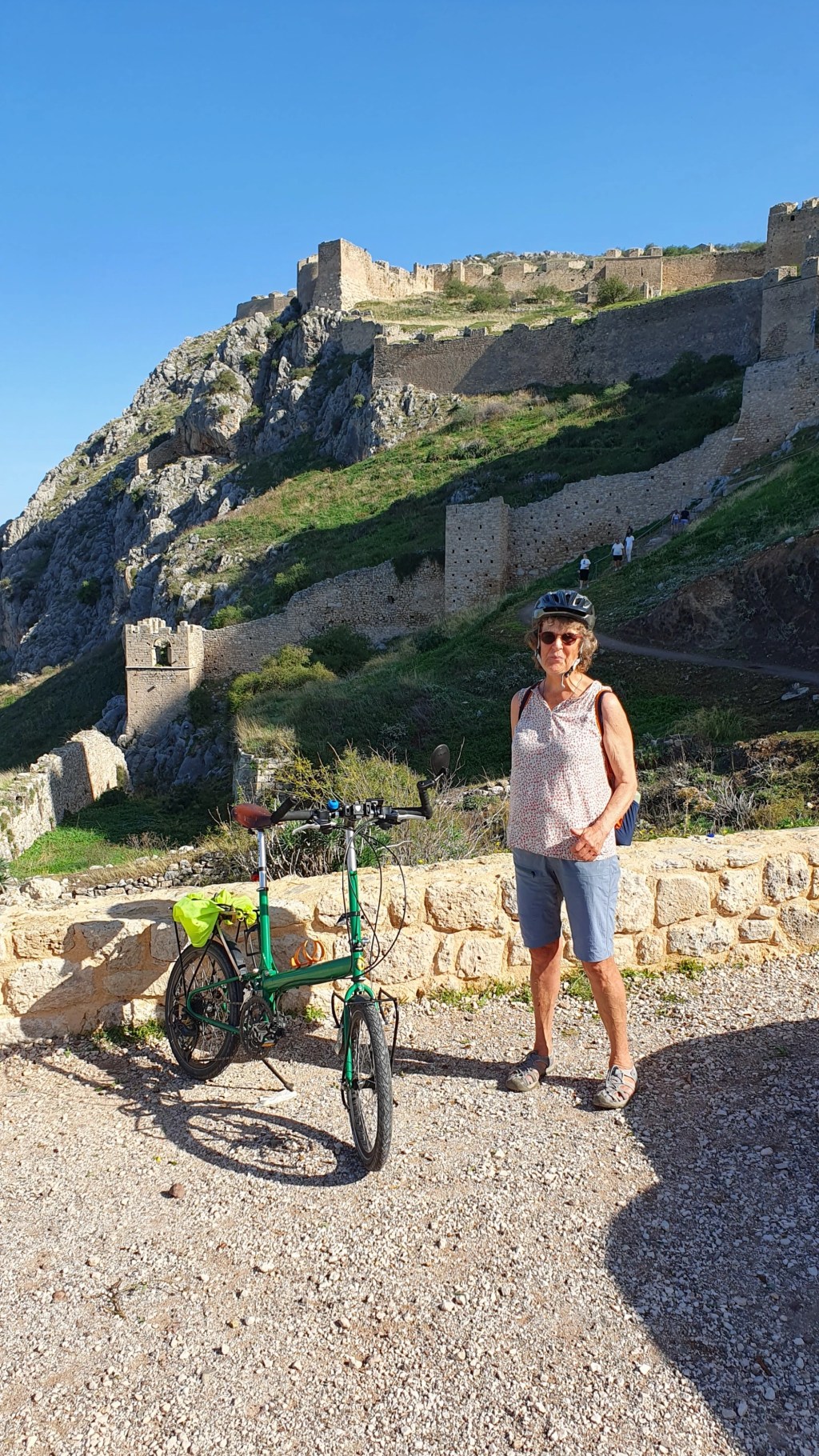
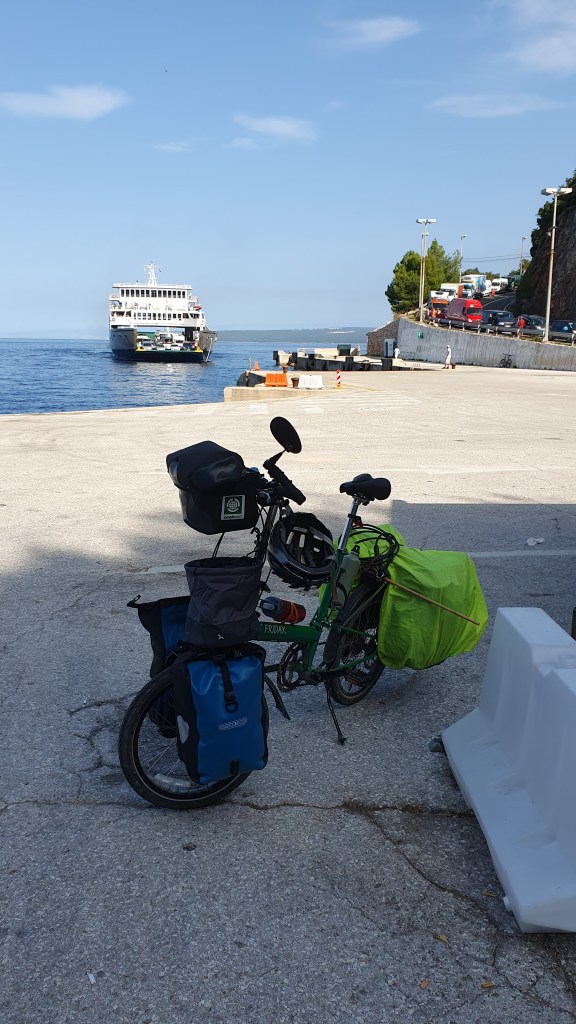
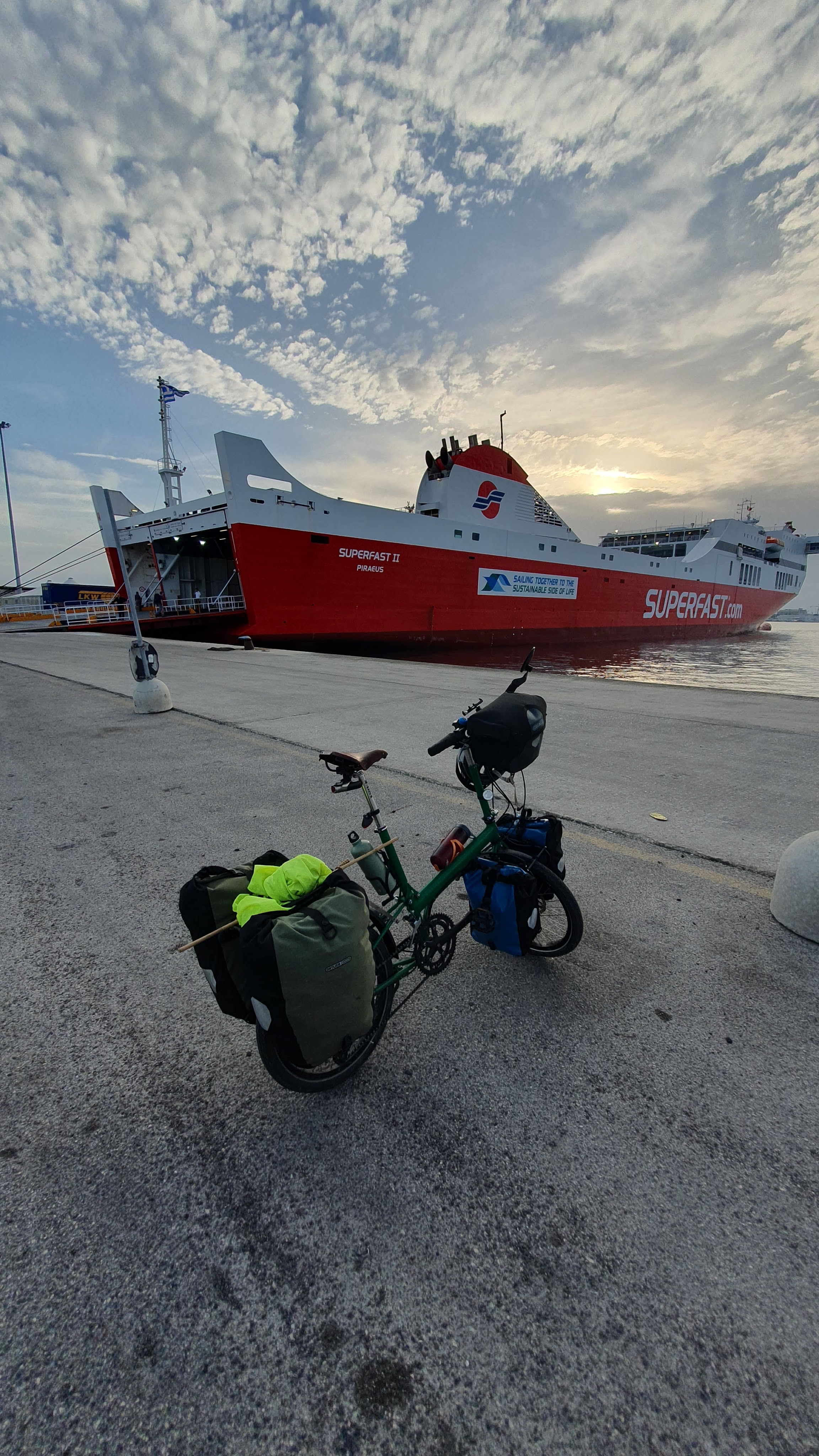
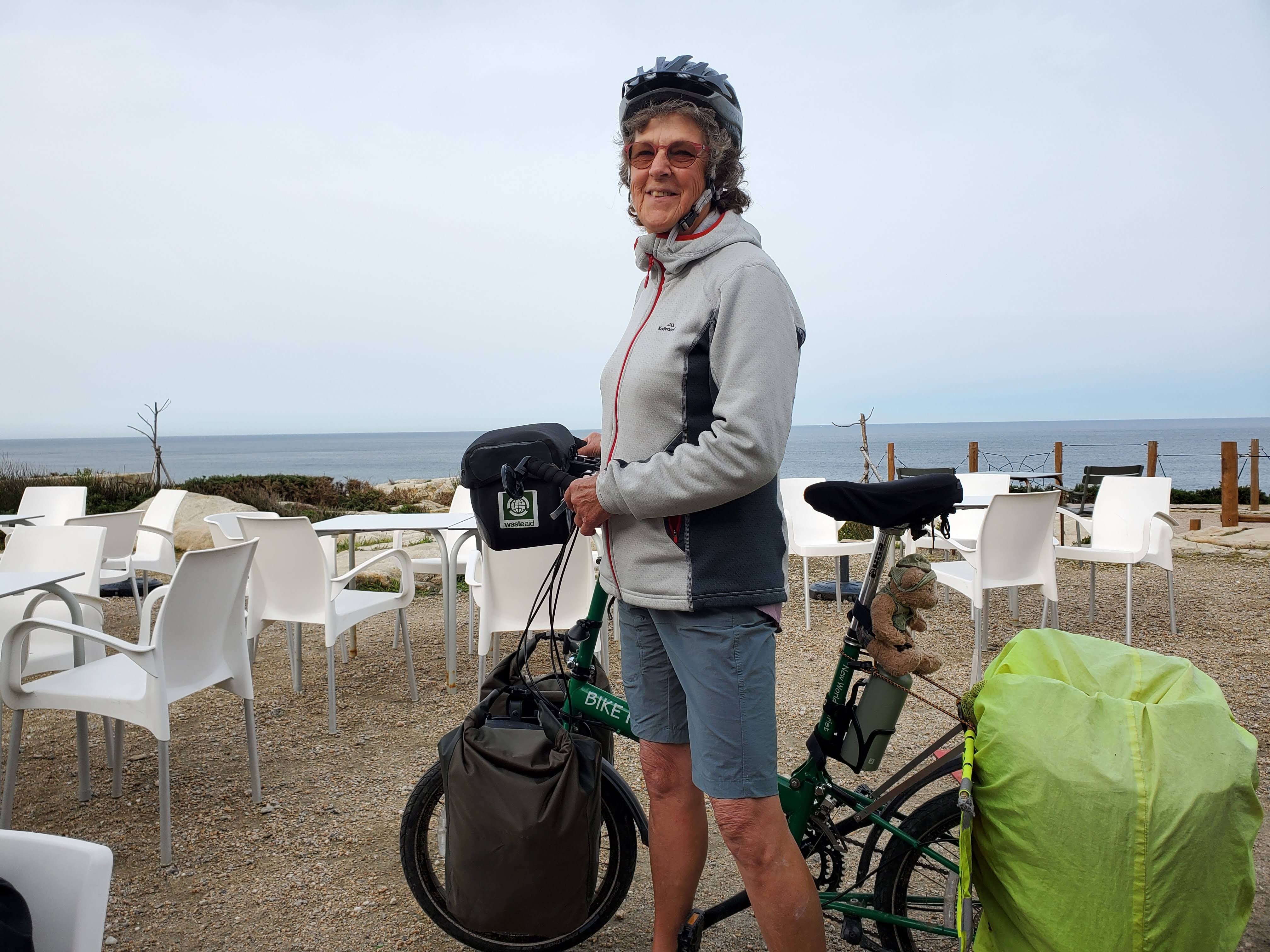
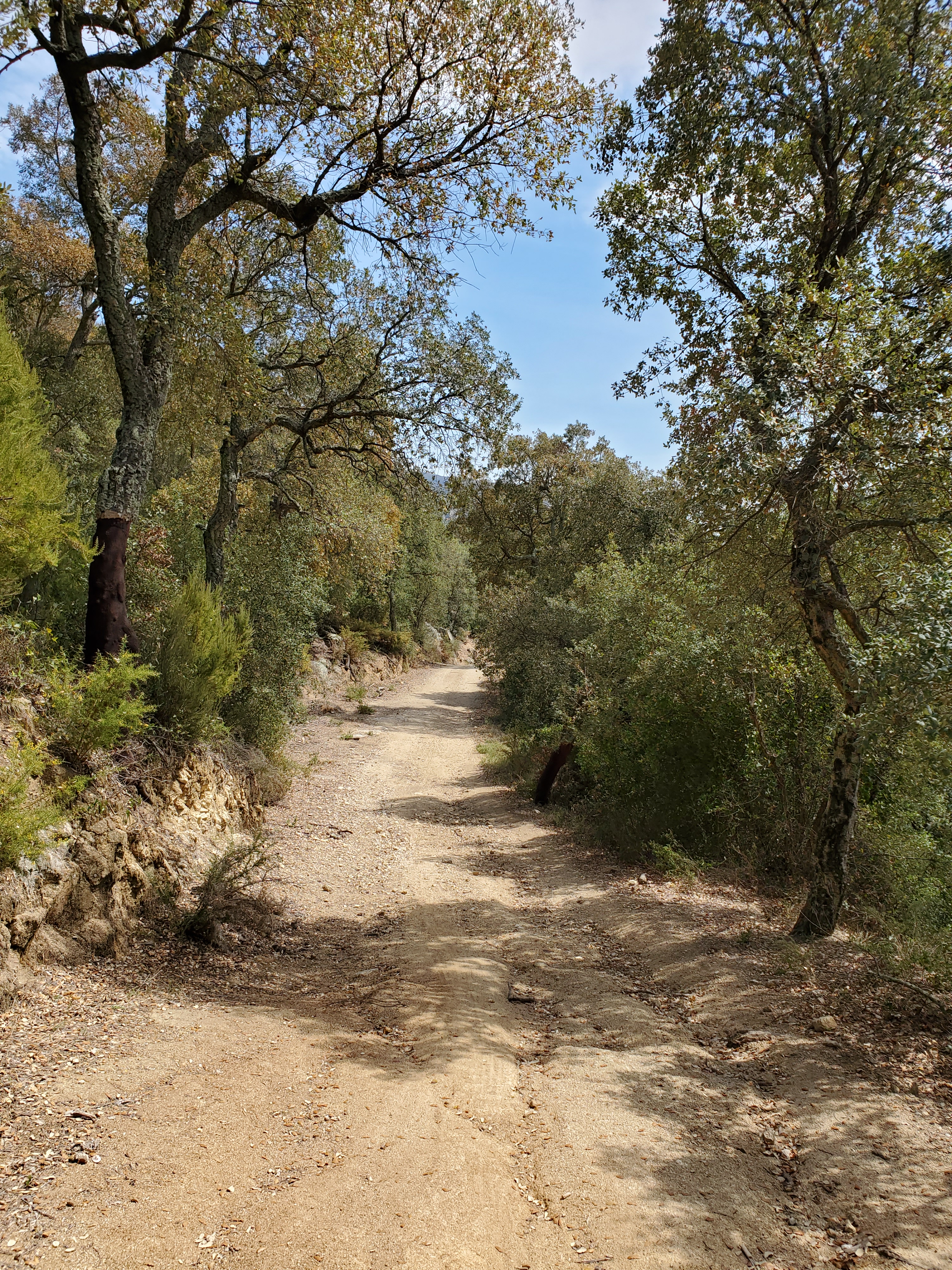
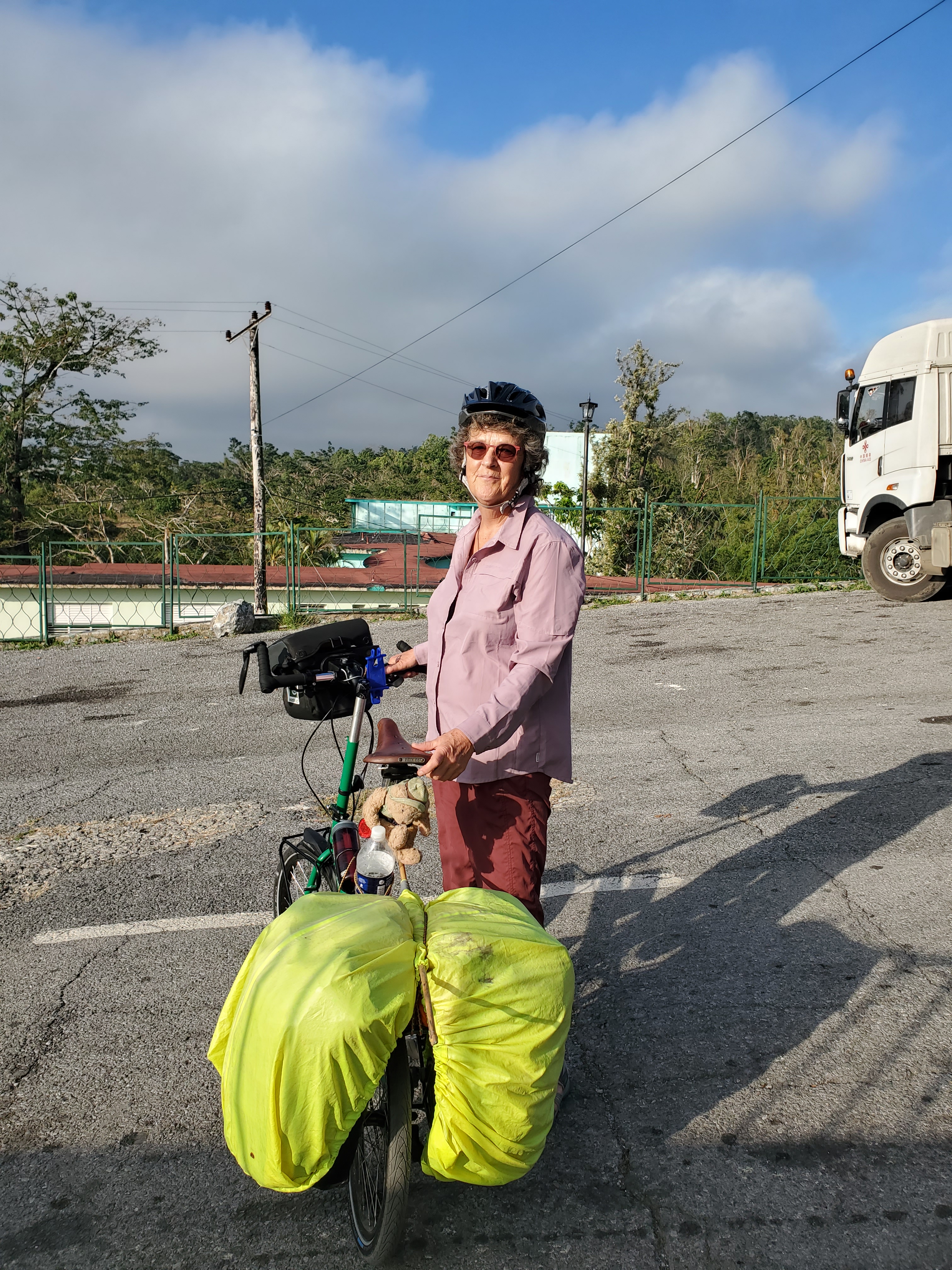
“Is there anything you need?” asks the Greek driver in very good English, winding down the window of her car. She slows to a halt as she passes, the rising sun just visible through the olive trees on this road through the hills. I briefly explain how, though I value her care, I need nothing; I am simply savouring my mastery of a 4000 km cycle journey through Europe on this, my final day. I relate how I left Lisbon in March and having passed through a swathe of countries which border the Mediterranean, I have reached the final day of my journey, a 50 km ride to Athens. For a moment, we are both still. “You are remarkable,” she says gently; as we part, I sense that for both of us our day is the better for this momentary encounter.
HISTORY REPEATS
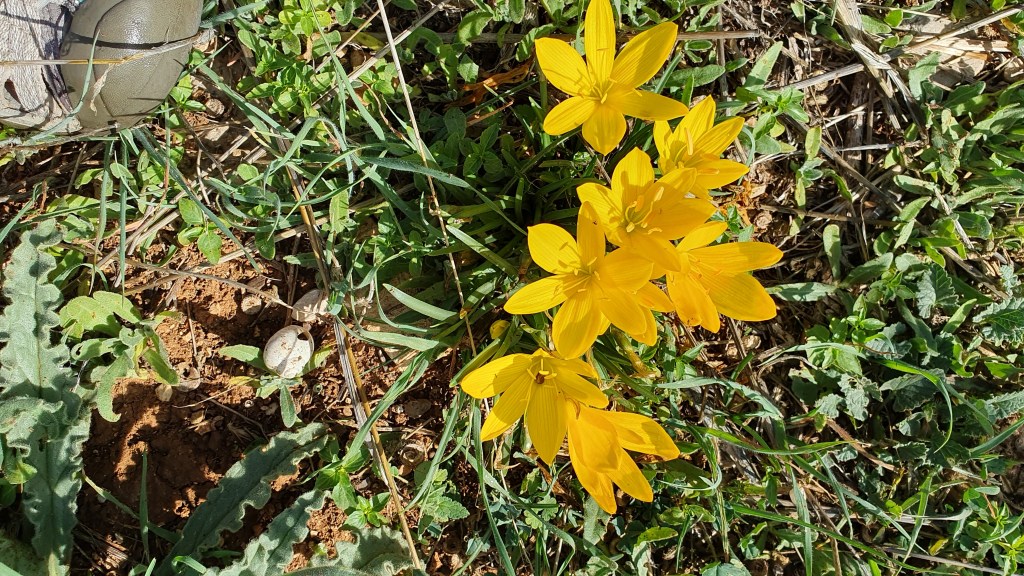
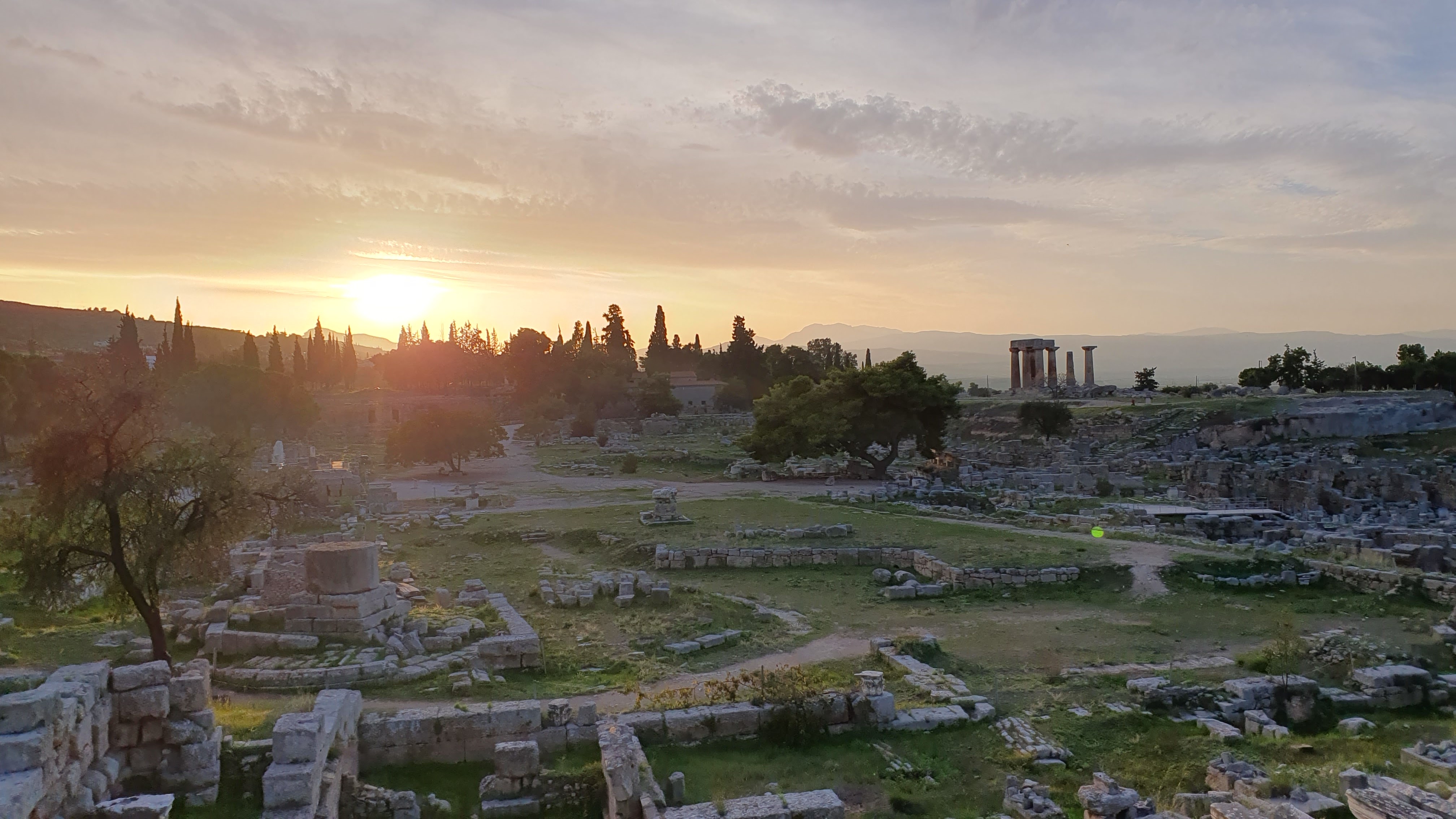
With 80 km to cover today including two ferry journeys to co-ordinate, I farewelled the friendly guest house owner, Katerina, before 8am. With the gift of fresh eggs from her chickens, now hard-boiled for lunch and stashed in my front pannier, I had left the town of Ancient Corinth in the morning cool. Today though, every experience seems heightened: . There is a poignancy in how this is my last chance for these sights, these scents, these experiences.
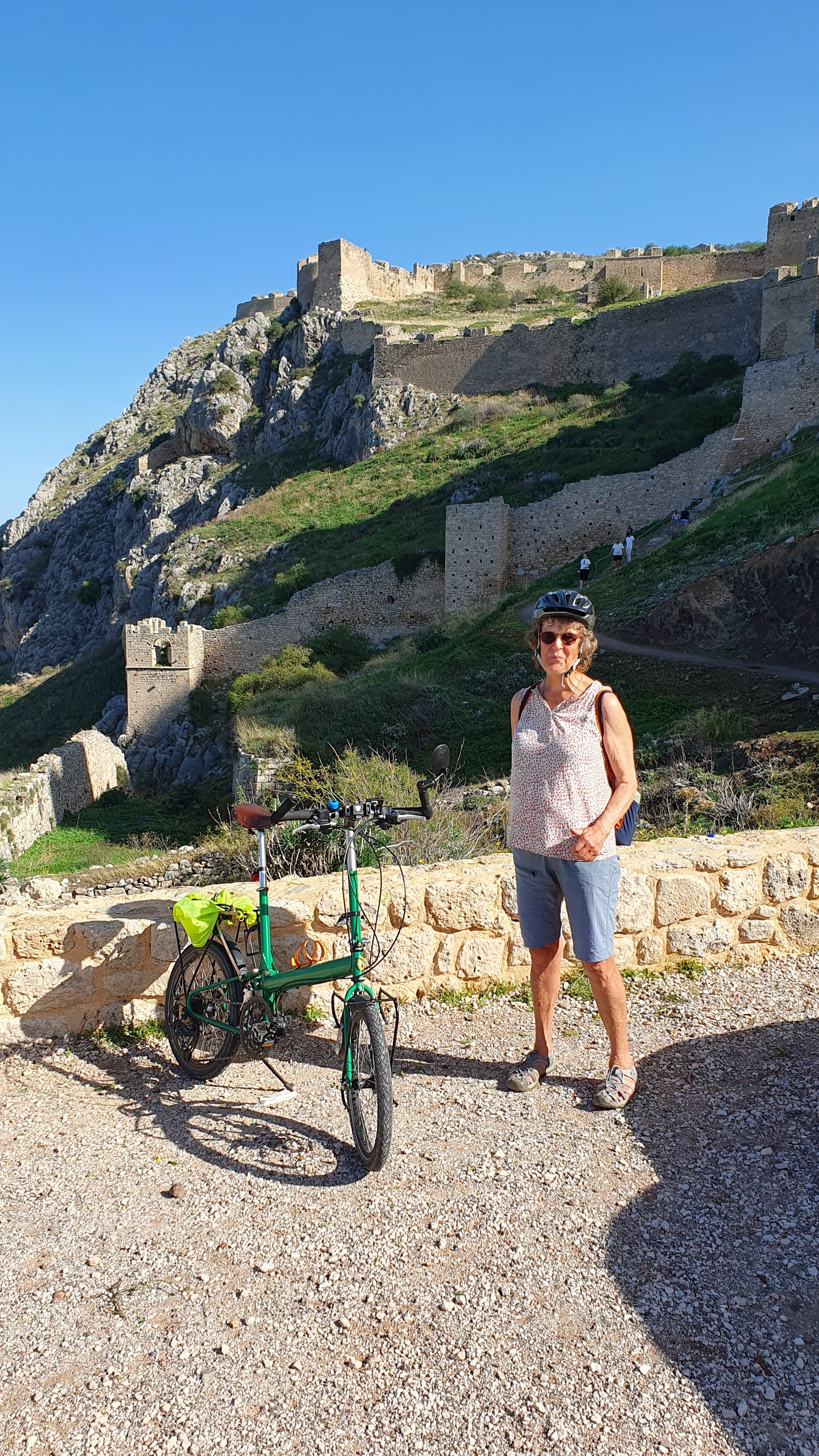
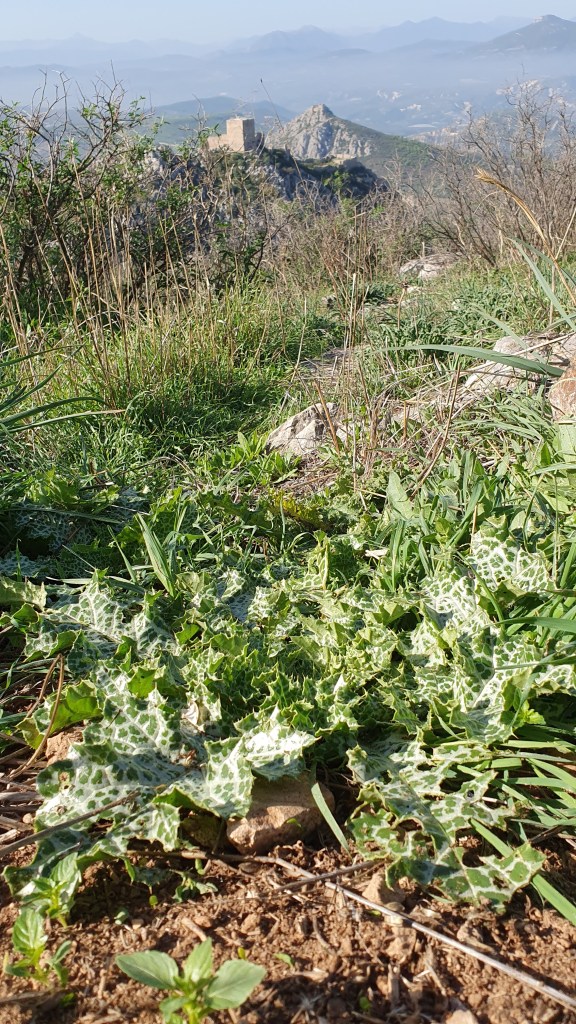


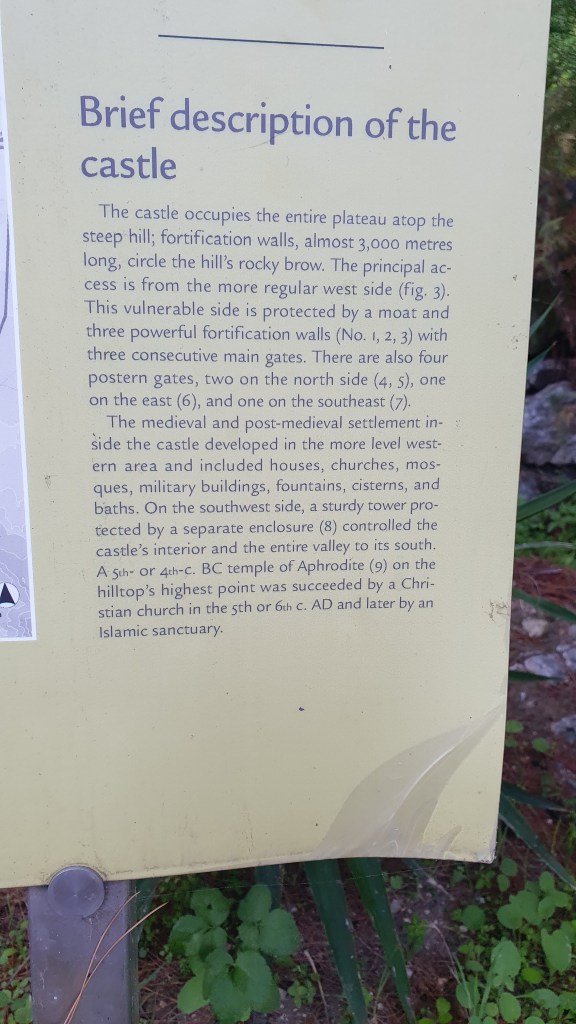
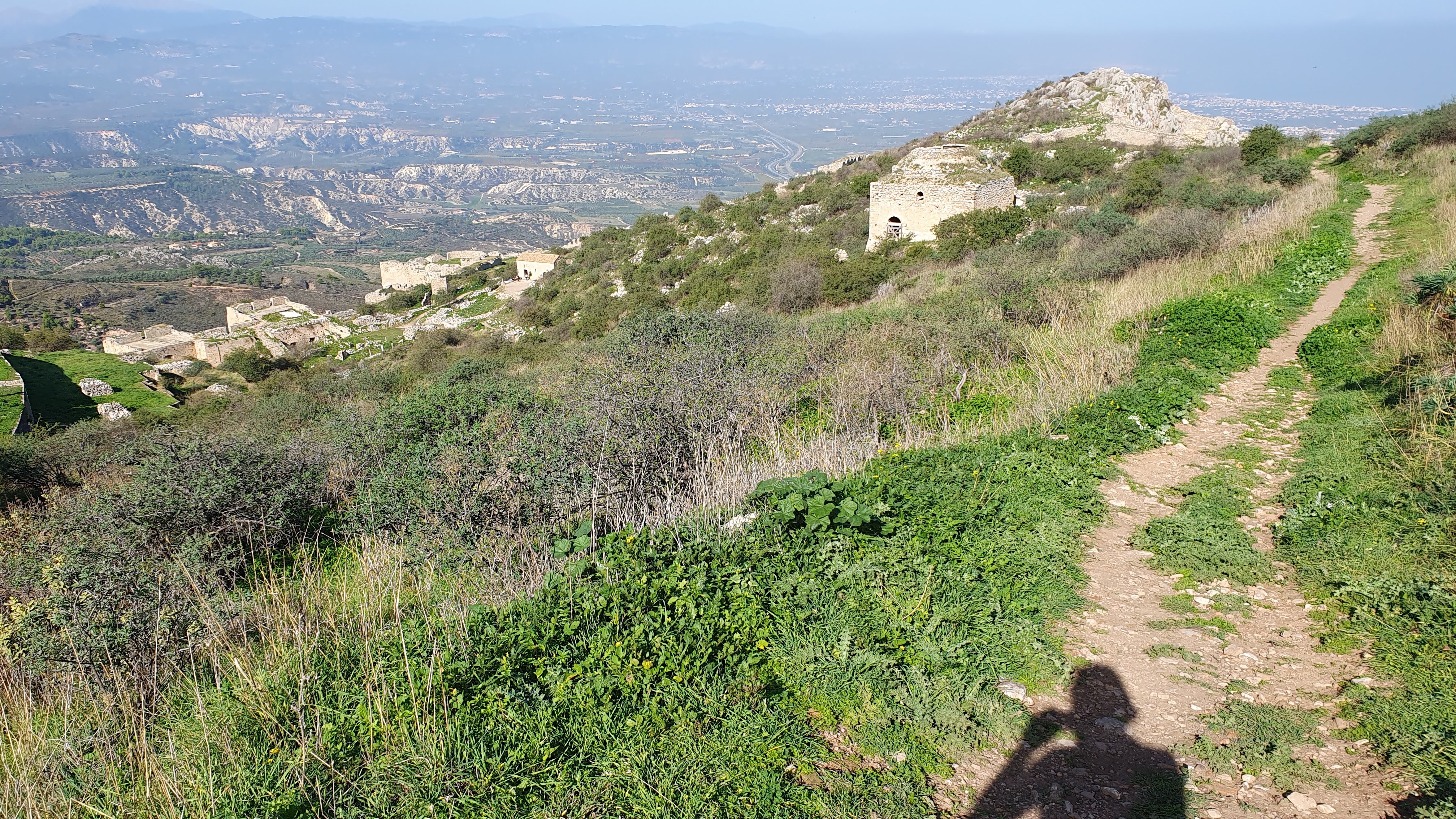
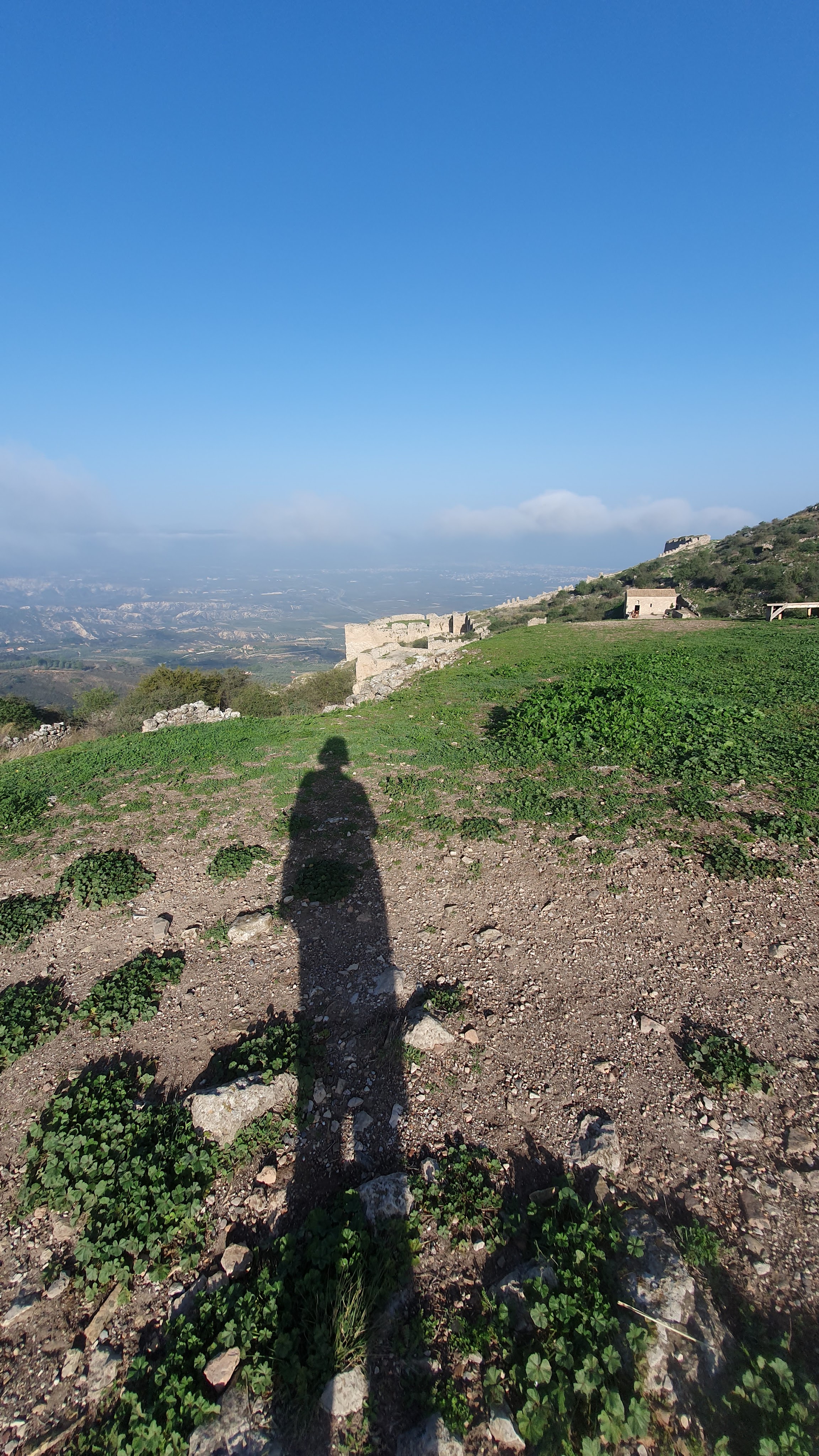
Towering above me is the historic fortress of Akrocorinth. It’s a regional microcosm of three thousand years of conquests and defeats, the rise and fall of religions, overturned by the each new set of the rulers of the day. Yesterday I’d climbed amongst the ruins of Mycenean, Roman, and Byzantine empires, scrambled around Crusaders’ temples, the mosques of Ottoman Turks, and remnants of barracks built in the heyday of Venetian rule. Today, I’d awoken heavy of heart, so conscious of current suffering in the Gaza region; seeing this hilltop site highlighted by the early morning sun reminds me this cycle of conquests is not yet over.
THE CYCLE OF THE SEASONS
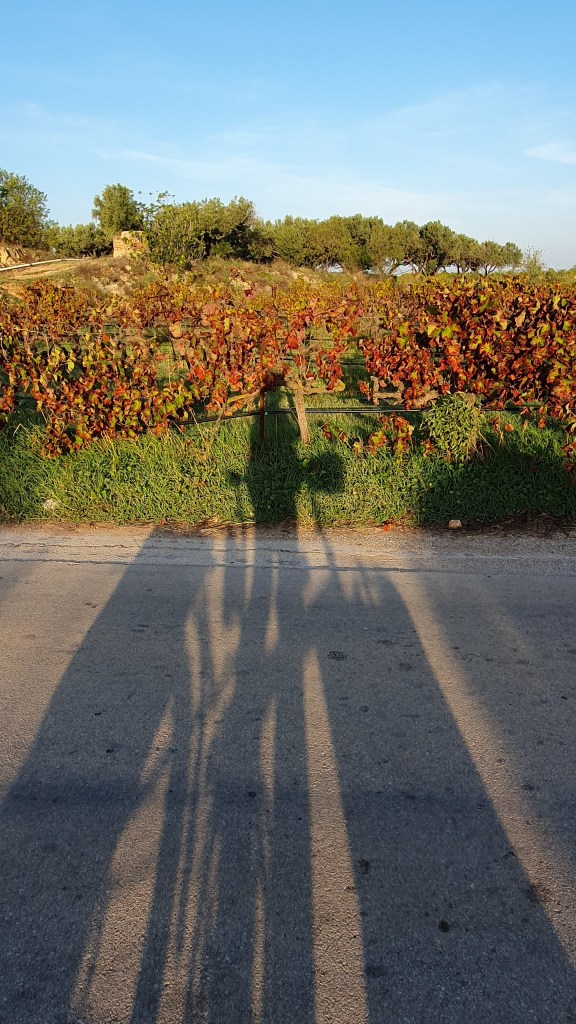
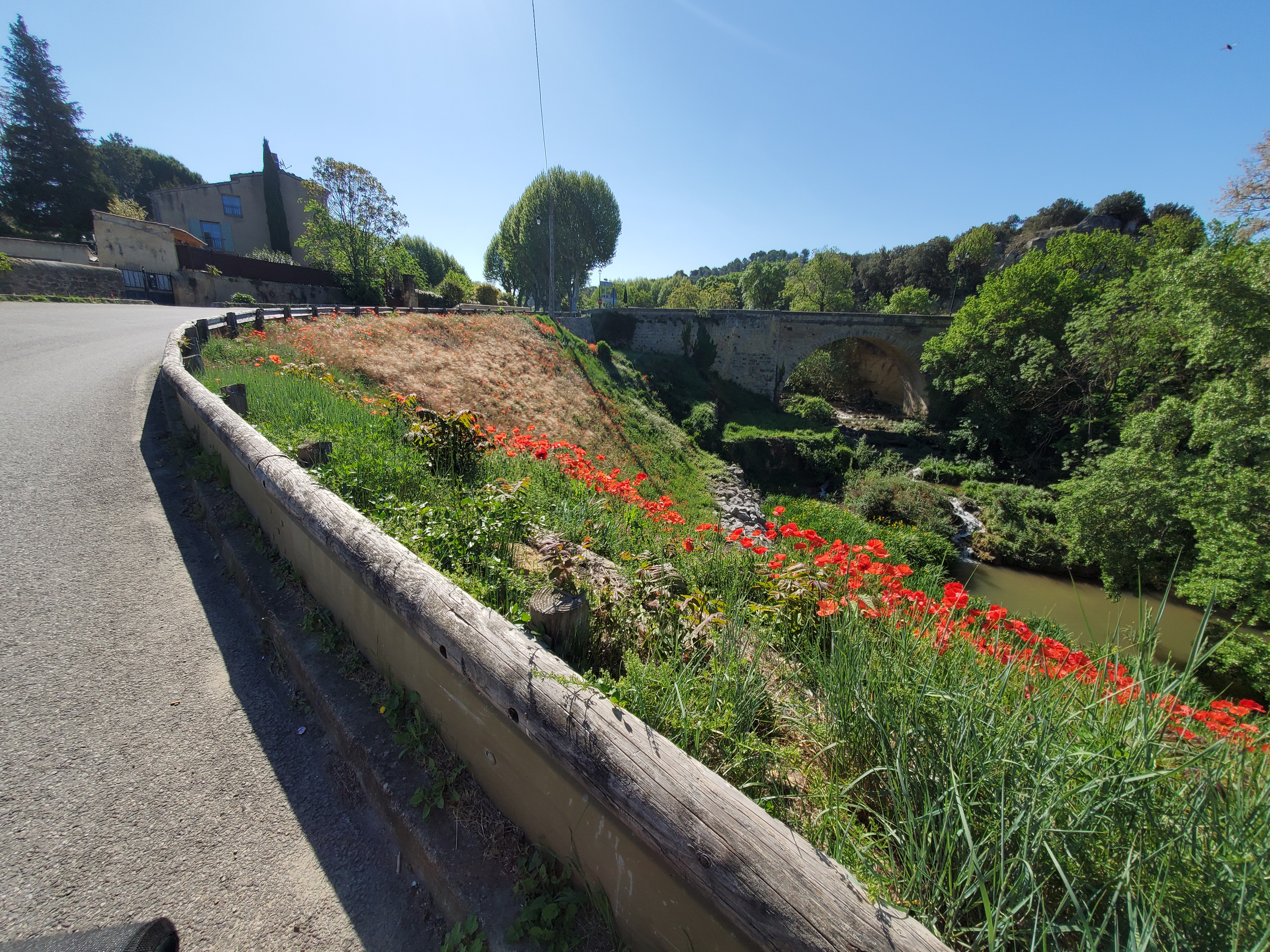
I cycle down towards the modern city of Corinth and the extraordinary engineering of the Corinth Canal. Red and golden autumnal leaves now crisp on long-since harvested grape vines seem to give a nod to the start of my journey. ‘Is it really nine months,’ I ask myself, ‘Since I passed tiny green stemlets budding on the hard-pruned vines of the Portuguese spring?’ It was my stop to savour this sense of completeness, to recognise the flow of the seasons across my journey, to breathe in one last time the constants and the variations, as well as to celebrate my mastery, that had seen the friendly driver so concerned.
PLASTIC WATER BOTTLES
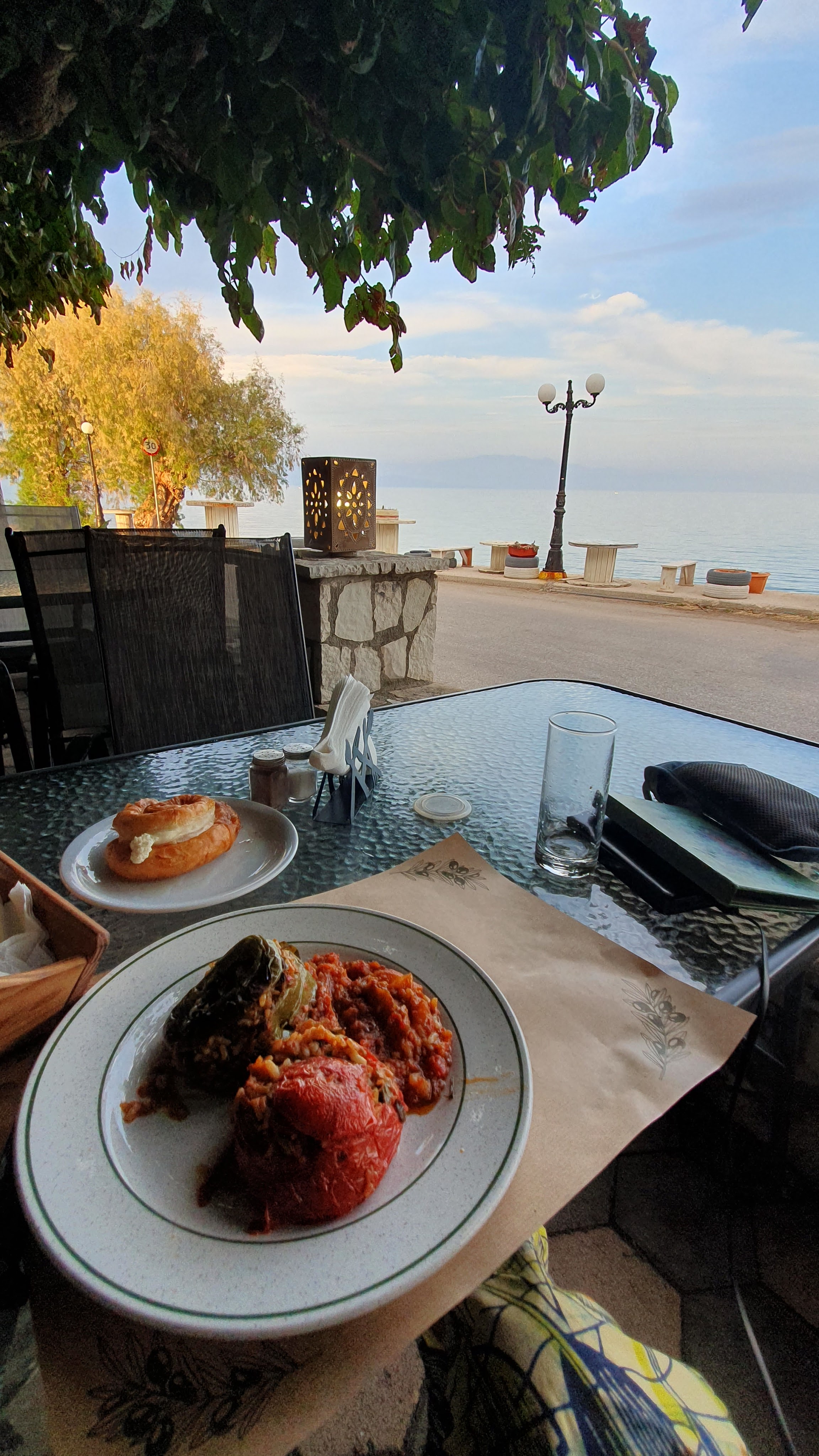
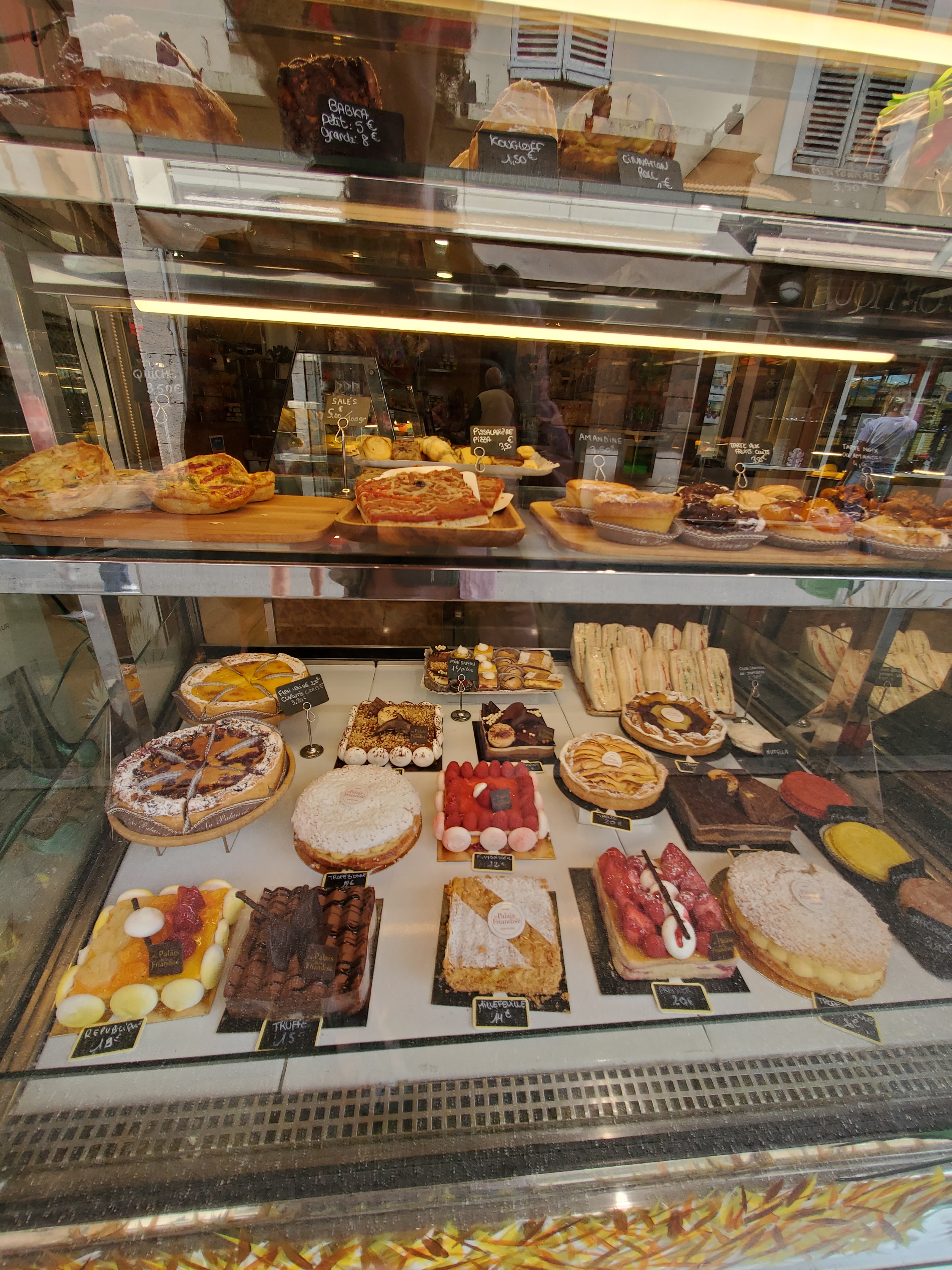
This nine-month journey has defined constants and honed changes within me too. This morning,even the espresso I order at the pavement cafe seems more flavoursome than ever as I take stock of my journey. While the morning deliciousness of a Portuguese custard tart is (regrettably) but a distant memory, to stop after a couple of hours cycling for a thimbleful of coffee and a comfortable off-saddle-seat-in-the-shade has become a consistent joy-filled routine. Today once again I refuse the chilled plastic bottle of water. Here in Greece, they seem almost a mandatory accompaniement to an espresso in place of the glass of water offered elsewhere, but after managing nine months of travel without buying or consuming bottled water, I don’t plan to start now.

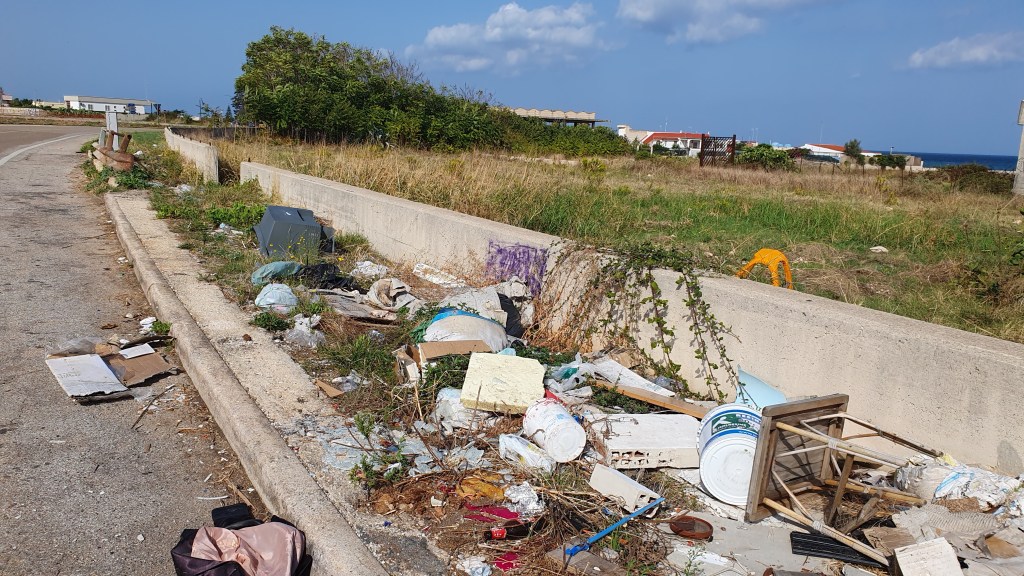
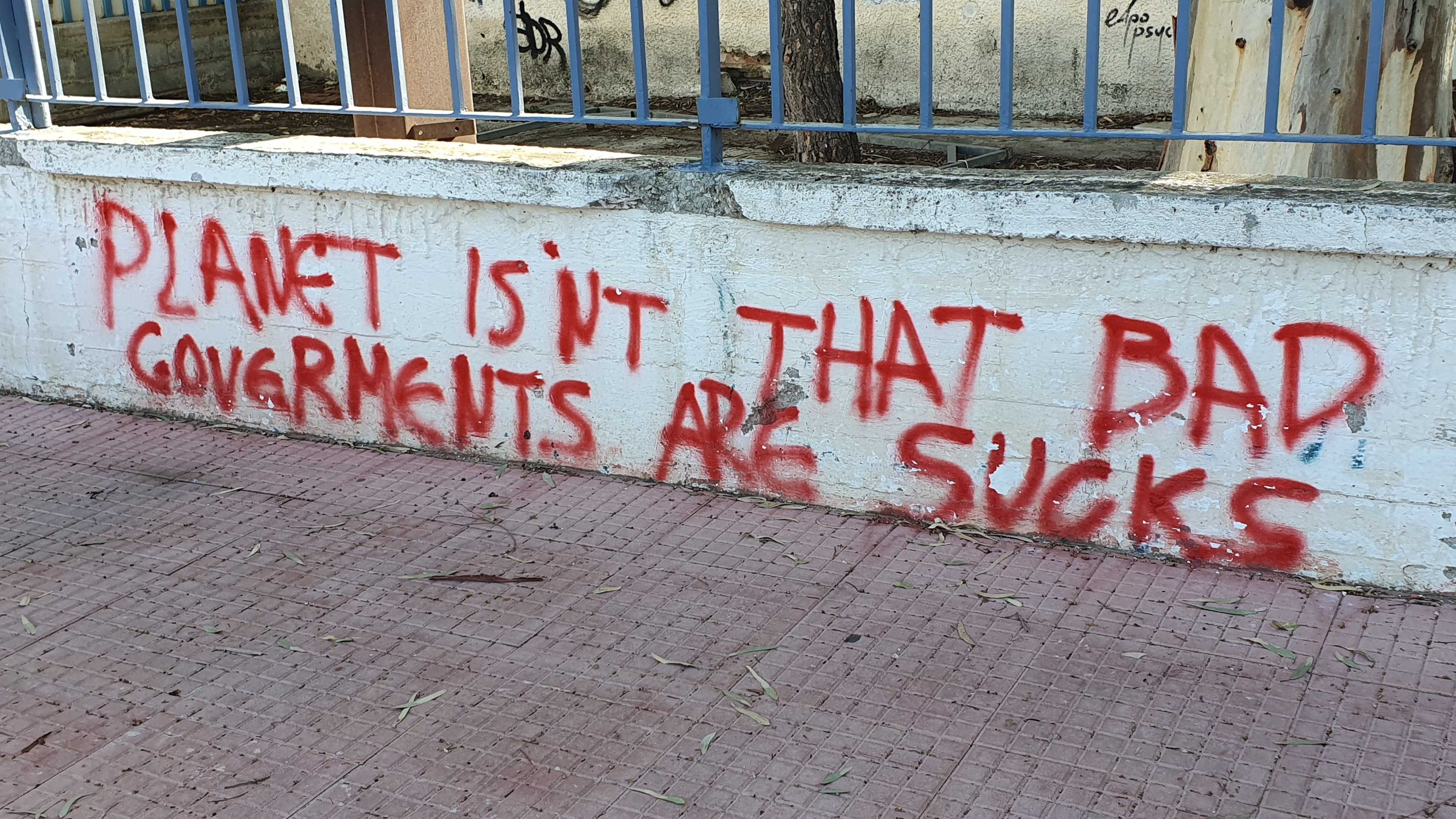
If I hear you say, “Why bother, Jane?” when I mention my position on bottled water, let me tell you I ask myself that too. The roadside this morning has been littered with plastic water bottles, many still half full, and my sense is that people dont actually know what to do with each bottle they receive from a cafe, it becomes too uncomfortable a burden to tolerate so they eject it from their seat in the car or the bus. Viewing the roadside detritus, I mourn how we humans seem unable yet to collaborate on finding solutions to the littering of plastic, the swathe of realistic strategies necessary to meet the needs of all.
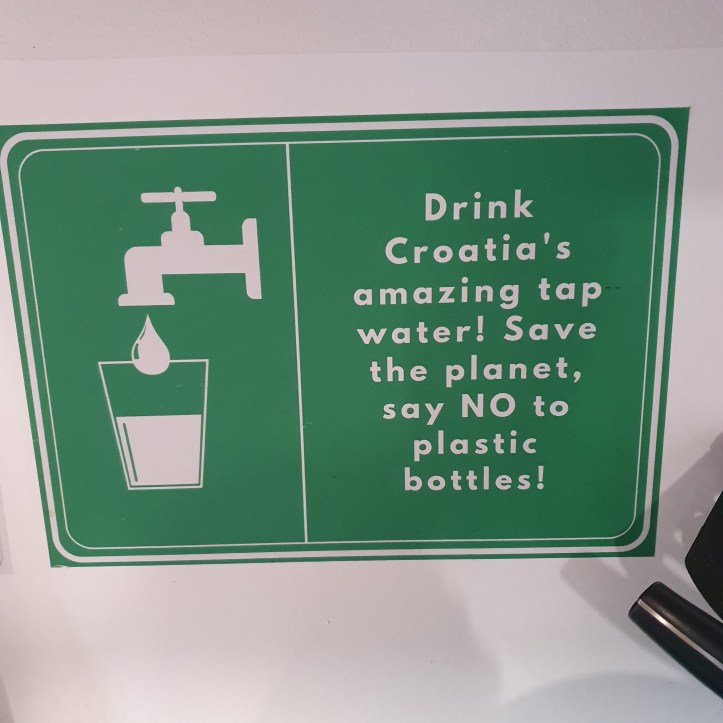
For me, my firm position on bottled water adds to my well-being in two ways. First, it gives me a sense that ‘at least I am role modelling an alternative, for perhaps, just perhaps, somebody today will be led to copy my approach, then tomorrow someone will notice them eschewing plastic water bottles too and choose to do the same, and so forth. Secondly, equally important for me, it gives me a sense of ‘agency’: that I have the power to act, I don’t have to ‘follow the herd’, I am not powerless.
4 BASIC NEEDS
That sense of autonomy, of having a choice, meets an important need in me. Indeed, this year I’ve come to understand that autonomy is one of the four basic needs that all humans share. ( I imagine you sense this same longing, to know you have ‘agency’ regarding matters that concern you). And the other 3 basic needs? Connection/Interdependence; Safety/Physical needs; and the need for Meaning/Purpose.
2000 PIECES OF LITTER
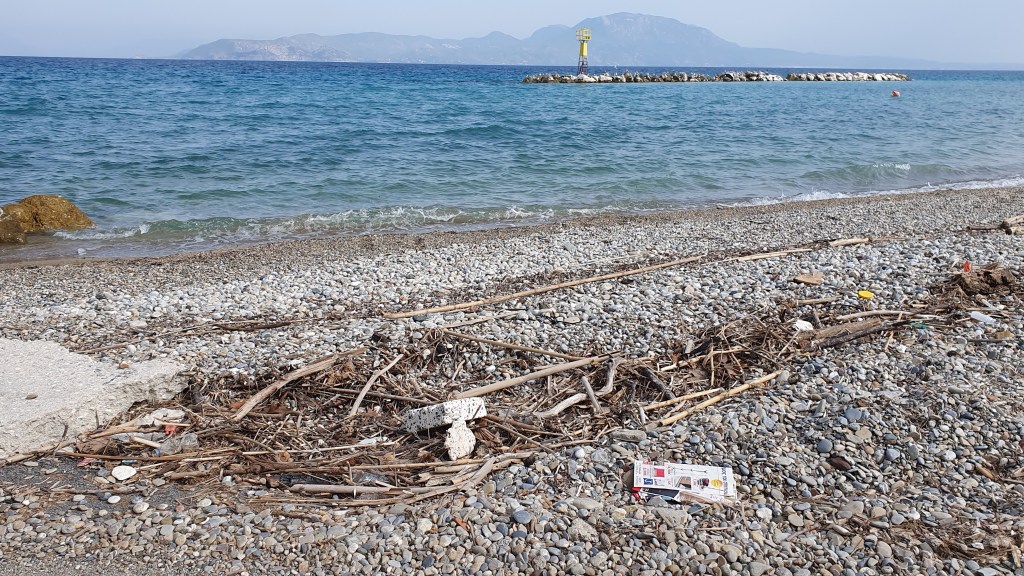
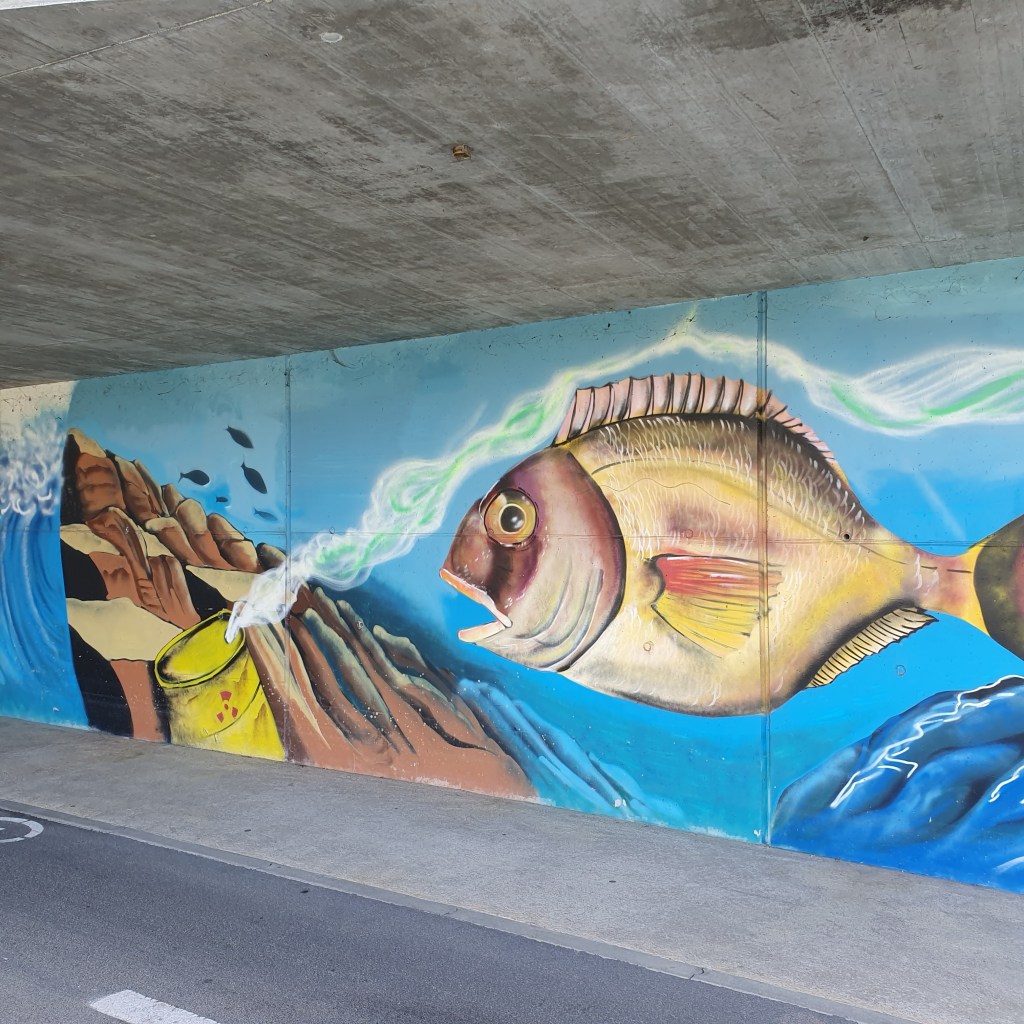
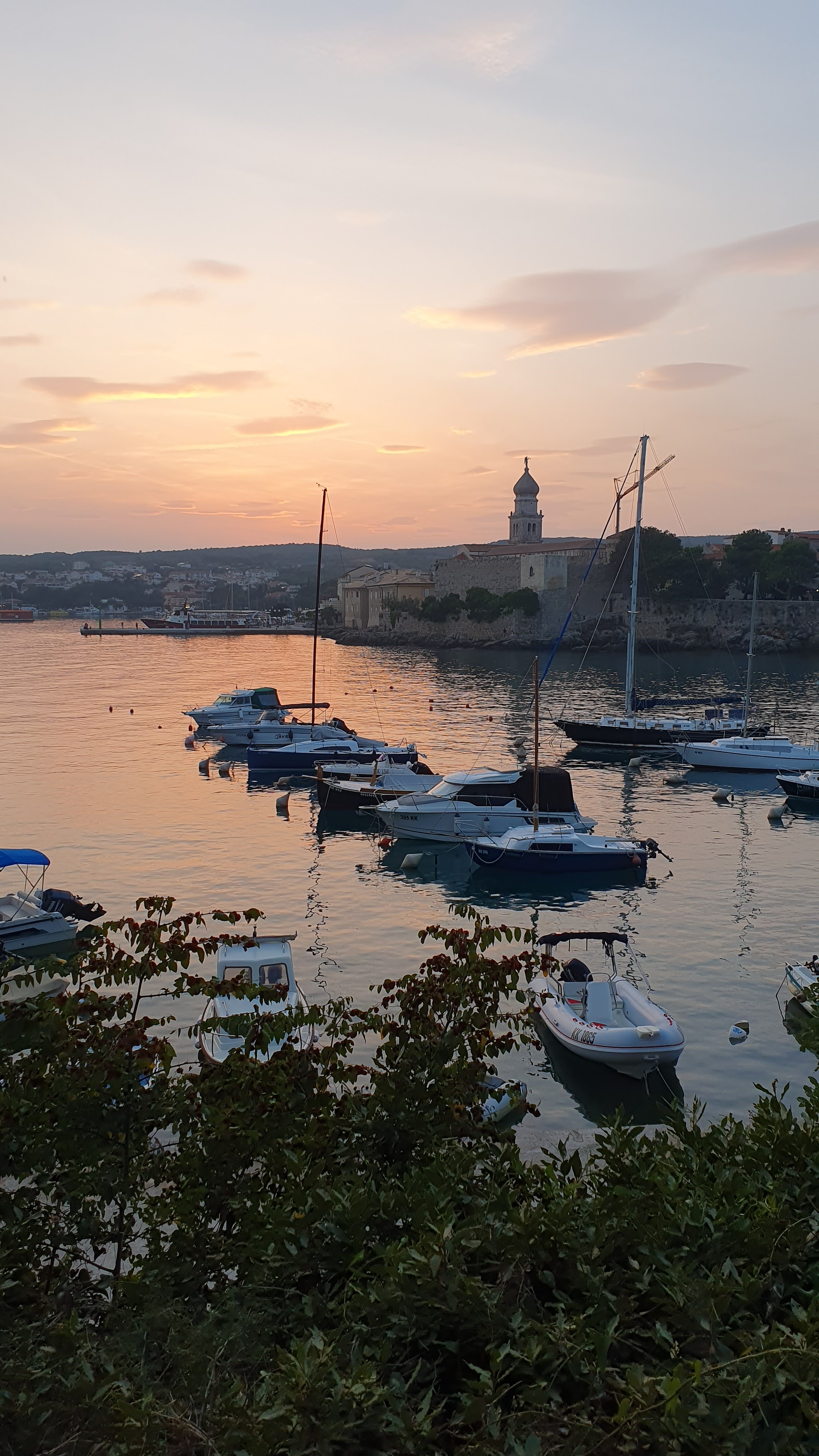
In Croatia last month, my guide on a sea kayaking expedition explains how he has stopped eating fish. “It is too unhealthy now – too many microplastics within their flesh.” It reminds me of another position I hold: to pick up ten pieces of plastic rubbish each cycling day. Bottles, straws, cigarette packets, cable ties or coffee cup lids, ten items take only a minute or two to amass.
So far this year I’ve binned 2000+ pieces of ‘it’s-not-my-rubbish-but-it’s-our-common-future’ plastic. Perhaps some fish stay healthier because they don’t encounter those pieces I picked up, or maybe some seabirds stay alive? What I know is when I look struggling nature in the face, when I hear of biodiversity loss or pollution issues, that in conjunction with my vegan diet, I feel nature and I are on the same team. My actions are I know just a ‘drop in the ocean’ but as I cycle I envisage a ‘Green Verges’ movement spreading through the thousands of cyclists touring the globe. And then imagine when hikers and walkers join in too…

Dont get me wrong, I’m very aware how ‘reducing waste at source’ is needed too. That means confronting corporations, governments, the powerful. To move waste reduction forward takes activism. I know this from experience for one of the reasons I have taken a year off to cycle this year is that just such activism drained my capacity.
I’m sure not everyone has capacity for activism, yet I sense almost every individual has enough ‘agency’ to pick up litter. To me, the issue of litter damaging the natural world is too great to assume Councils or Governments can solve it alone; we humans have let it get so bad, its going to take all of us, not just a paid team. A snowballing multitude of ‘green verge angels’ around the globe could be part of change to a litter-free future, so I have a request. Dear Reader, just for today, would you be willing to try out being a green verge angel yourself, and join me to pick up ten pieces of plastic rubbish too?
KIWIS IN SCOTLAND
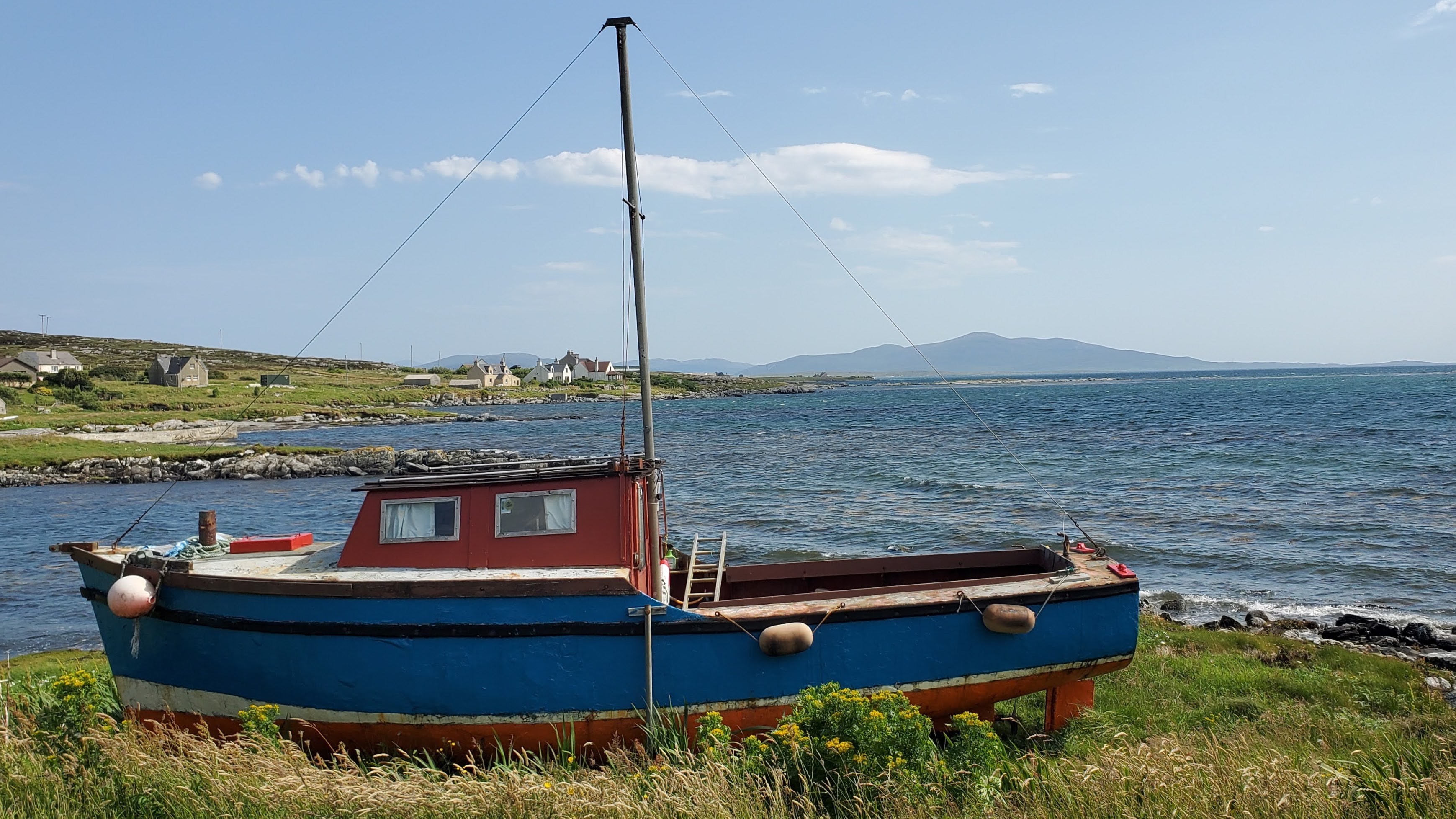
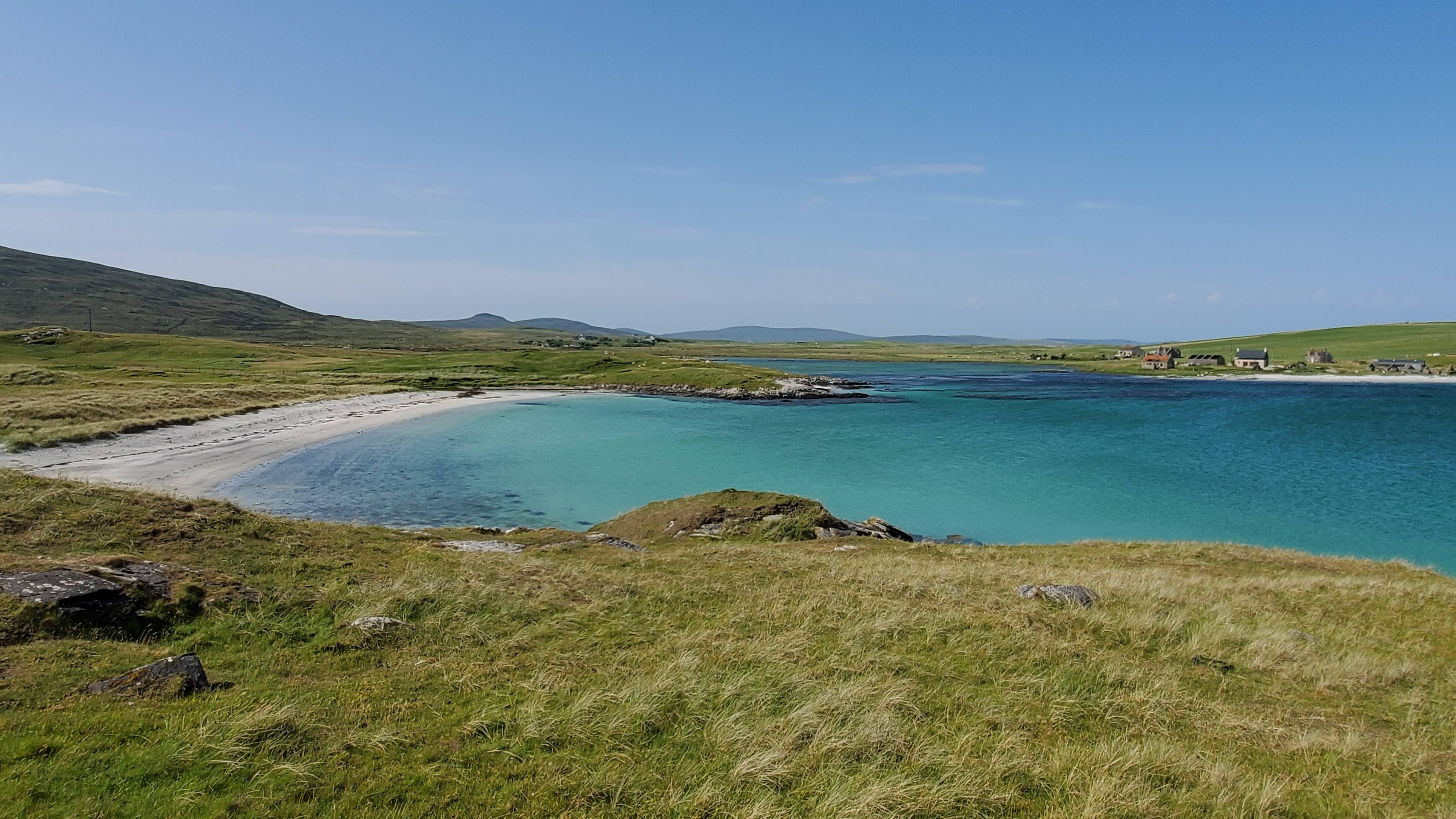
After I enjoy my espresso, I cycle on. This morning’s friendly car driver reminds me of care I have received from strangers. over and over again. “Will you join us for coffee? The two Kiwi cyclists I met on the early ferry that morning from the Island of Lewis back to mainland Scotland are waiting for me. Approximately half-way through my day’s 93km ride from the port of Ullapool on Scotland’s west coast over the moors to the east coast city of Inverness, is the turning to Garve Station. They have stopped, having passed me earlier, waiting for me to catch up. “Oh, I hadn’t realised there was a café nearby,” I replied, forgetting that it was Kiwis I was talking with. A few minutes later, I sit gratefully on a roadside bench as an excellent pot of fresh coffee is brewed up on a camping stove.
This friendly cycling couple is concerned by my description of the HelpX placement I am heading to the following day. They offer their phone number, ‘just in case’, and while it turned out that I thrived in the rather unusual environment ( see later), like today’s car driver, it was another humbling example of the willingness from strangers I meet to ‘go the extra mile’ for me.
A MOTHERING SPECIES
Travelling solo seems to bring out mothering instincts in people I meet. I note as an observation, not to denigrate such actions, that this resonates with research I’ve heard about this year that along with elephants and other species whose offspring take a long time to mature, humans are a ‘mothering species’, a term which has no gender basis, simply the raising of youngsters by caregivers of any gender that requires many years of nurturing.
I imagine you see it in yourself and others: people caring for the young, the old, for abandoned animals, and for solo cyclists! With no expectation of reciprocity, individuals in mothering species intuitively sense the needs of others and strive to meet them. While current forces push society to monetarise every interaction, and consider every transaction in terms of material reward, over and over again on my travels I experience this deep undercurrent of human nature.
I so want us all to celebrate this side of human nature. It seems such an antidote to marketing forces. May our collective human identity as a ‘mothering species’ be shouted from the rooftops! what makes it even better is realising how this instinctive ability to meet the needs of other human and non-human life has evolved to benefit us with a boost of seratonin. Marshall Rosenberg, initiator of the ‘Nonviolent Communication’ movement describes it thus: ‘The greatest joy in our life comes when we enhance the wellbeing of another.”
DUMPSTER DIVING
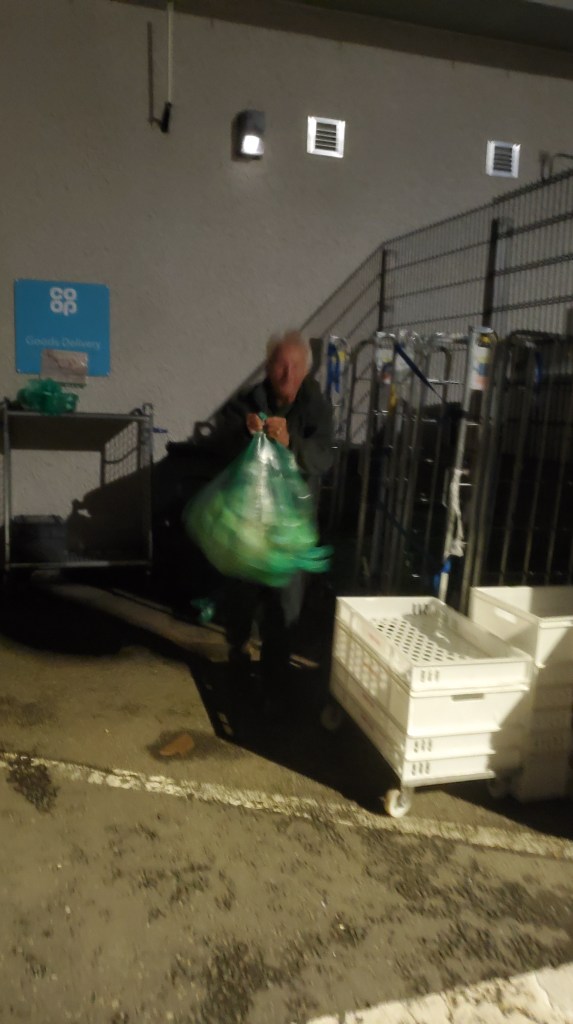
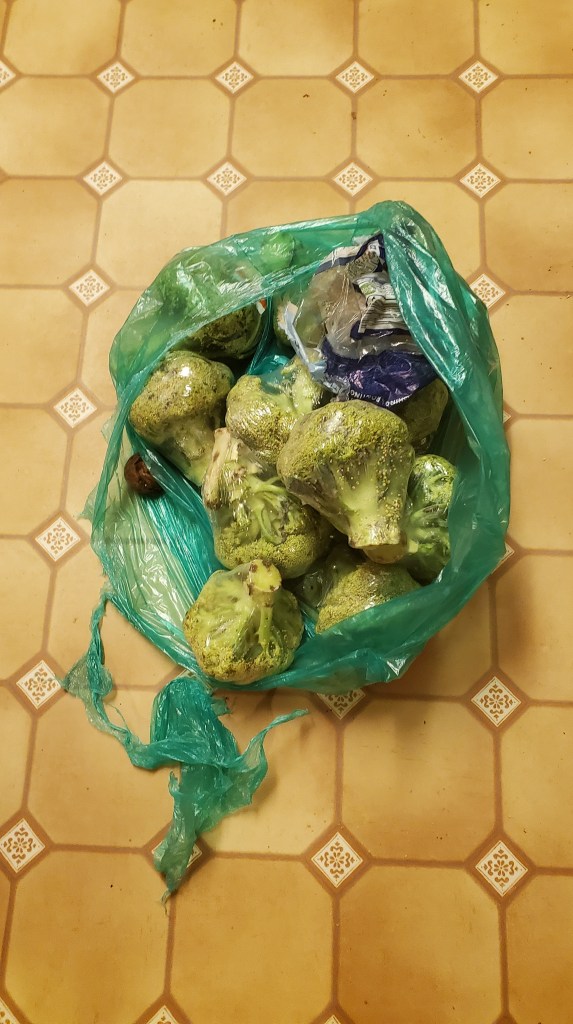
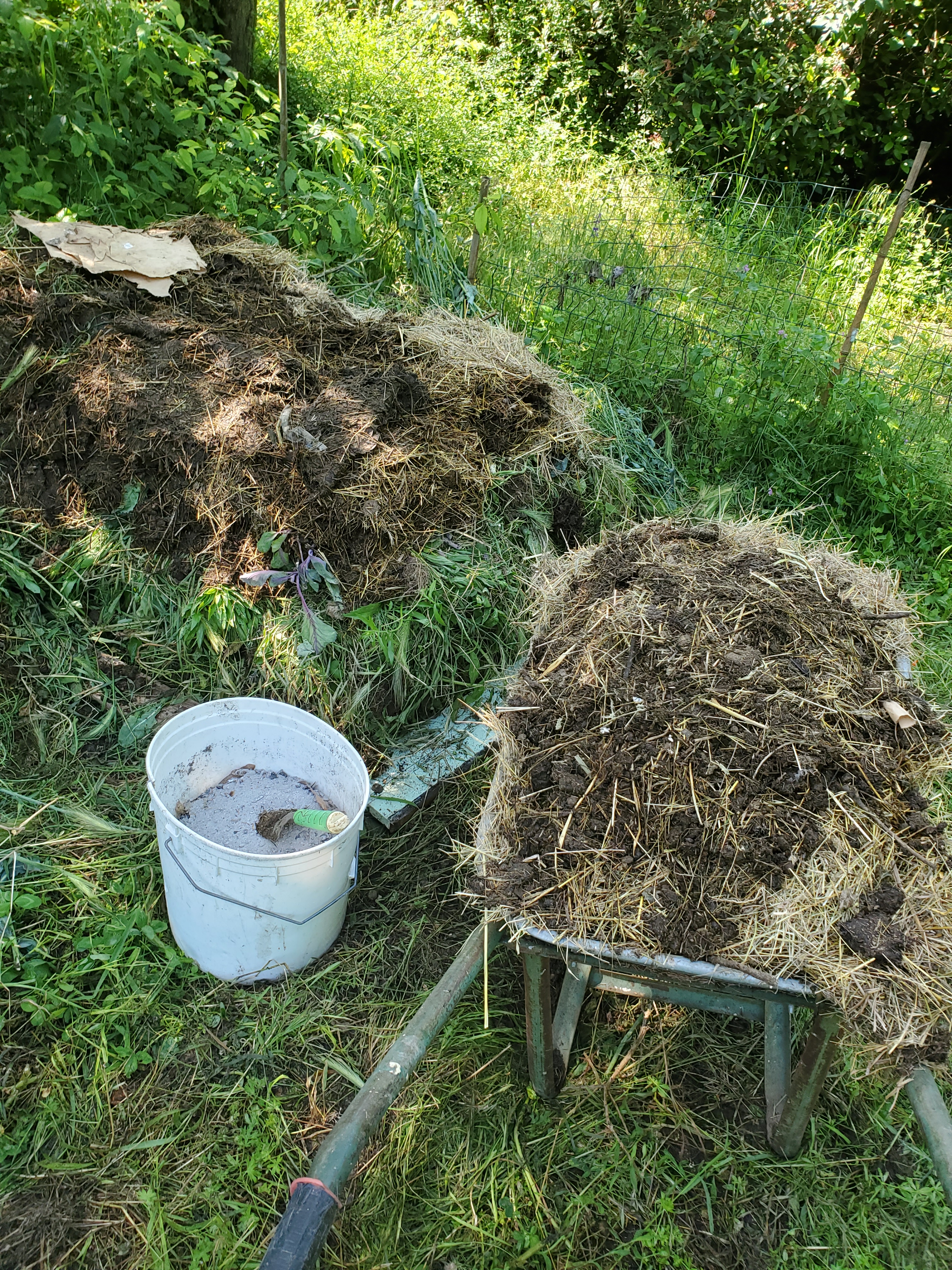
Cycling past the historic battlefield of Culloden Moor, I stay for a week helping a retired gentleman, an advocate for ‘dumpster-diving.’ Surprisingly, it is the strong position this HelpX host has ‘against waste’ that I find the most challenging. One night, I cower in his van at 10pm having accepted the invitation to accompany him, and watch him drag two large green bin bags out of the bins behind a local supermarket. We leave hastily before we are discovered, stashing the bags in the back of his van, so it is not until we reach home that we check out this hoard of past-its-use-by-date foods. I find my host’s glee a bit confusing: there is a 5kg bag of potatoes (one potato is rotten which has deemed the bag lot unsaleable) yet my host is a superb organic gardener and has just that day been harvesting home-grown potatoes. There are out-of-date croissants and loaves of bread of dubious attractiveness yet my host had that morning baked a delicious home-made loaf. I remove plastic wrap from broccoli stems so yellow they are to be placed straight into the compost bin, and with a kitchen full of home grown fruit, decline the offer to help myself to an out-of-date ‘Mr Kipling Apple Tart’, packets of which are piled high from previous sorties.
POSITIONS AND VALUES
It seems to me that it is easy for us humans to get mixed up between ‘positions’ we take and the ‘values’ we wish to honour. What I saw here in the boxes of tartlets piled high, too many to eat, the 41 forks in the cutlery drawer ( I counted them out of interest when the drawer failed to close), and the serried ranks of plastic plant pots, plastic bags and polystyrene seedling trays spread across the garden, filled with rain water, algaed to a slimy green, was that my host had adopted such a strong position that ‘nothing should be wasted’ that it had become self-defeating. Garden tools were hard to find amidst the plant pots and bags, and so became subject to rain damage. This led to new tools being purchased while the rusty old ones sometimes became apparent only when I tripped on them under long grass. As for the “Well, they only cost 2 pounds so I buy new ones when I cant find them” spectacles, I guess you would have been as bemused as I by the collections I made as I tidied house and garden.
And so it is I believe when we hold unwaveringly to a position. Although we may originally take the decision based on our values, it can become self-defeating. The career of my HelpX host, a superb organic gardener passionate about caring for the earth, was in teaching others to do the same, but it had ended traumatically for him when he was told he was no longer required, only to find his boss’s wife was given his position. As I interpreted it, his ‘no waste’ position gave him a feeling of security but now trapped into hoarding it was actually working against his underlying values. It was a strange week, but enjoyable. He was such a kind man, and took me on two separate afternoon cycling outings, wanting to ensure I saw the best of the beautiful countryside, while I spent mornings gardening and tidying, cleaning, sorting and seeking ways to shut the cutlery drawer!
Positions can be helpful. Almost a decade ago I decided to never drink a cup of coffee in a disposable cup. I still value it – if I forget to bring my reusable one, I will go without. Similar to the way I eschew plastic bottles, this position is a reminder of a value by which I want to live – to tread lightly on the earth. Yet I try to stay fully conscious it is simply a position: when it supports me living true to my values, I value it. I remain open to shifting out from positions I hold when they dont serve me.
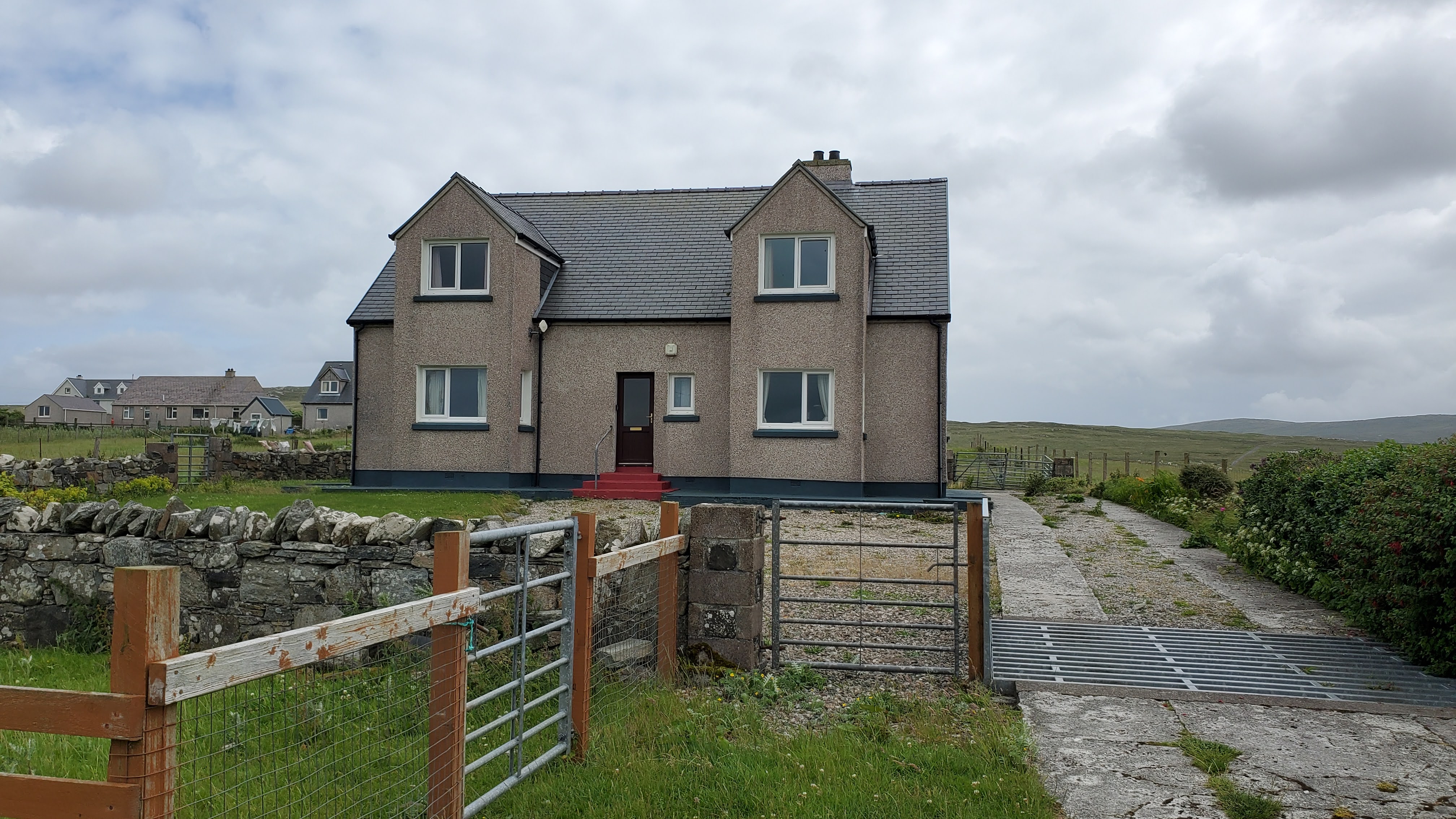
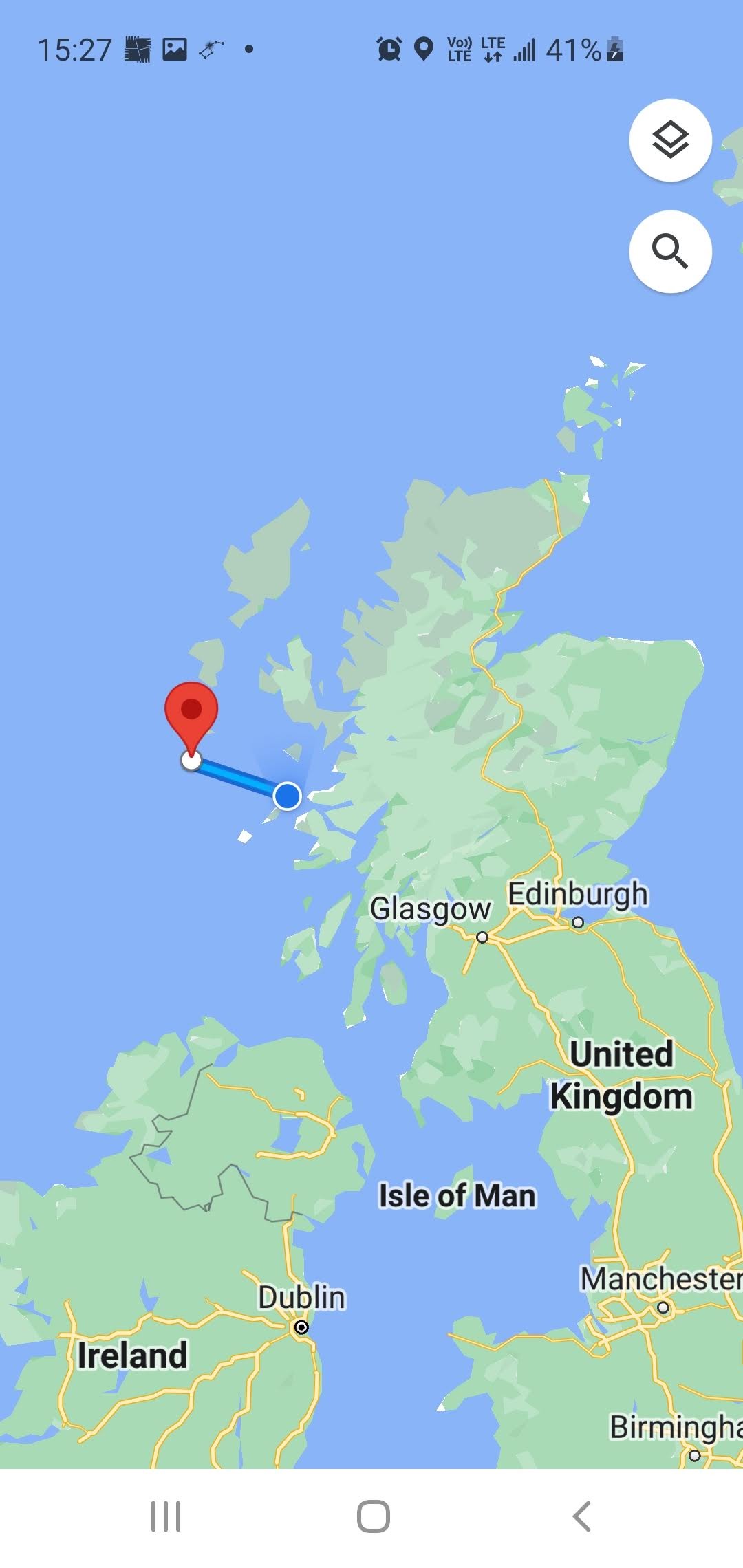
Sometimes one position I hold – for example the choice of a plant-based diet to care for the environment – may be in tension with other values I hold dear, such as honouring relationship with another, which fits with my value for nonviolence. Then a choice is needed. Which value do I honour for example, when staying with the 95 year-old Scots crofter who has eaten meat and fish all her life and wants to cook for me? (For me, ‘relationship’ won out; I happily shared meals of meat and fish when I sensed to refuse could bring disconnection). And if the time when a position no longer serves to honour myself and my integrity, I trust remember to lay it aside.

RIDING A BIKE
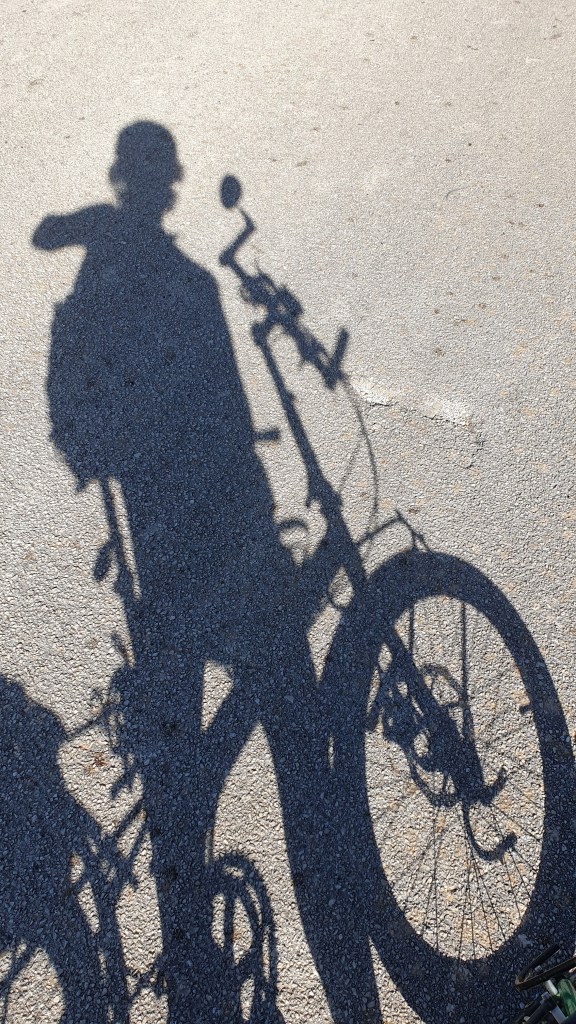
“I think it has done more to emancipate women than anything else in the world. It gives women a feeling of freedom and self-reliance. I stand and rejoice every time I see a woman ride by on a wheel…the picture of free, untrammeled womanhood.” Susan B. Anthony
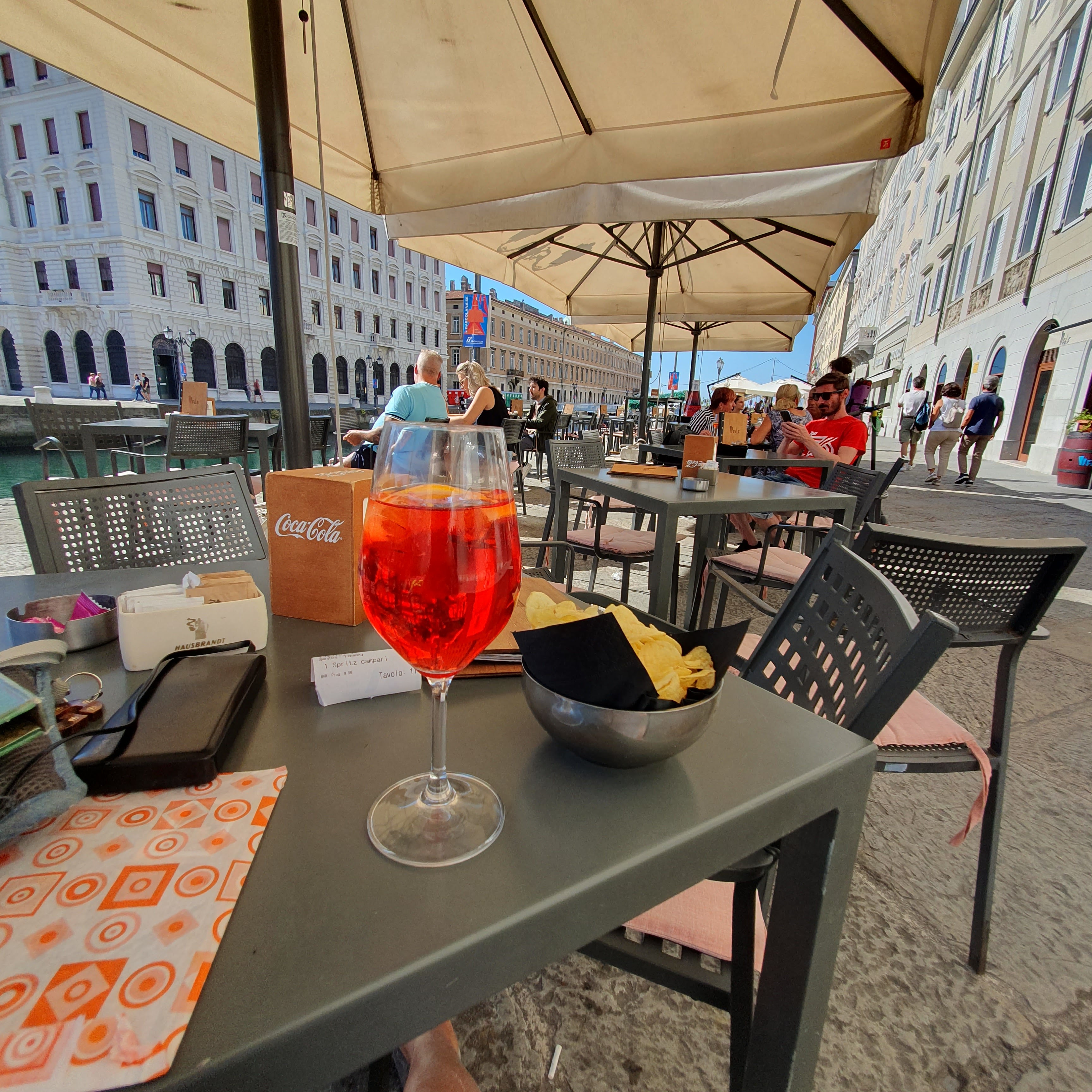
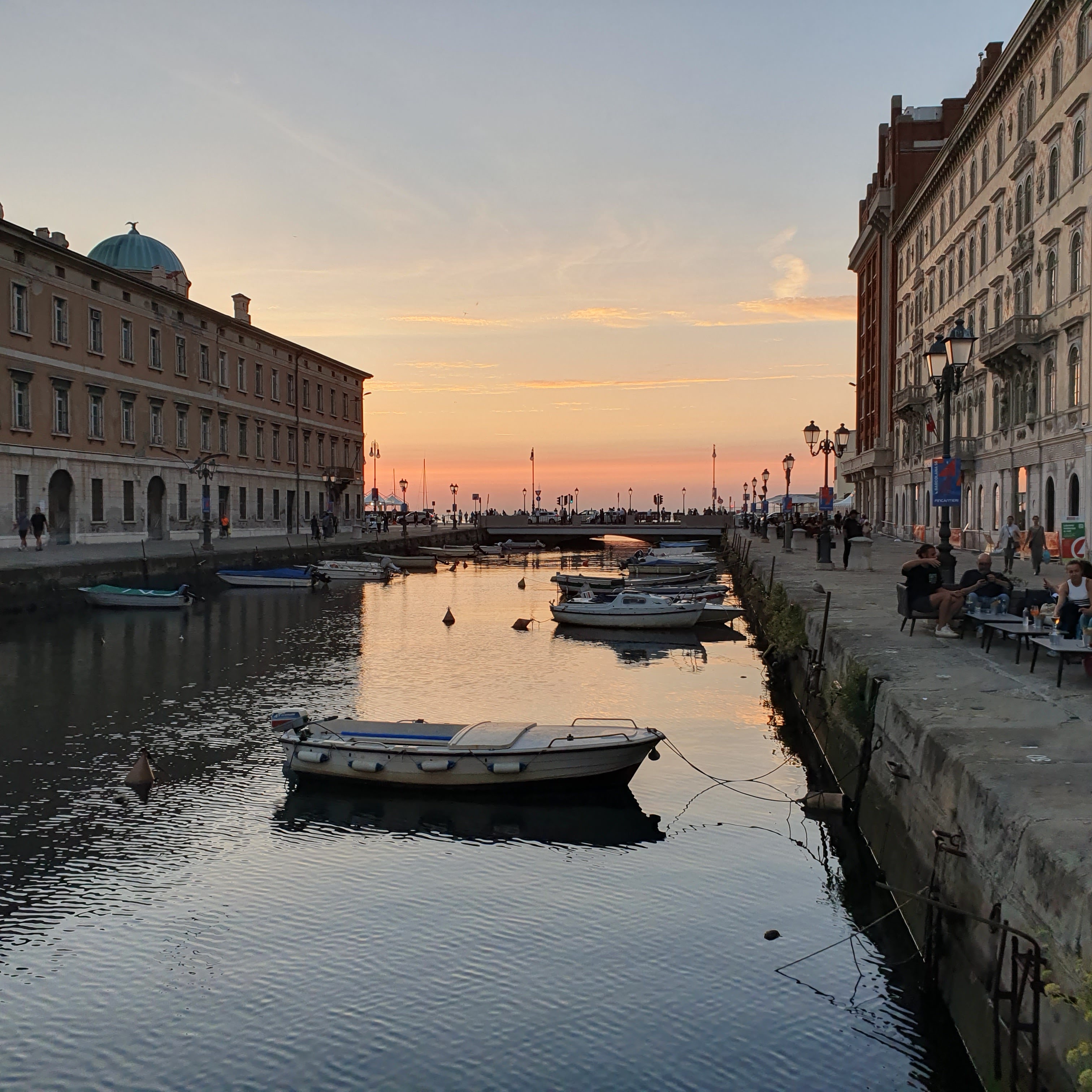
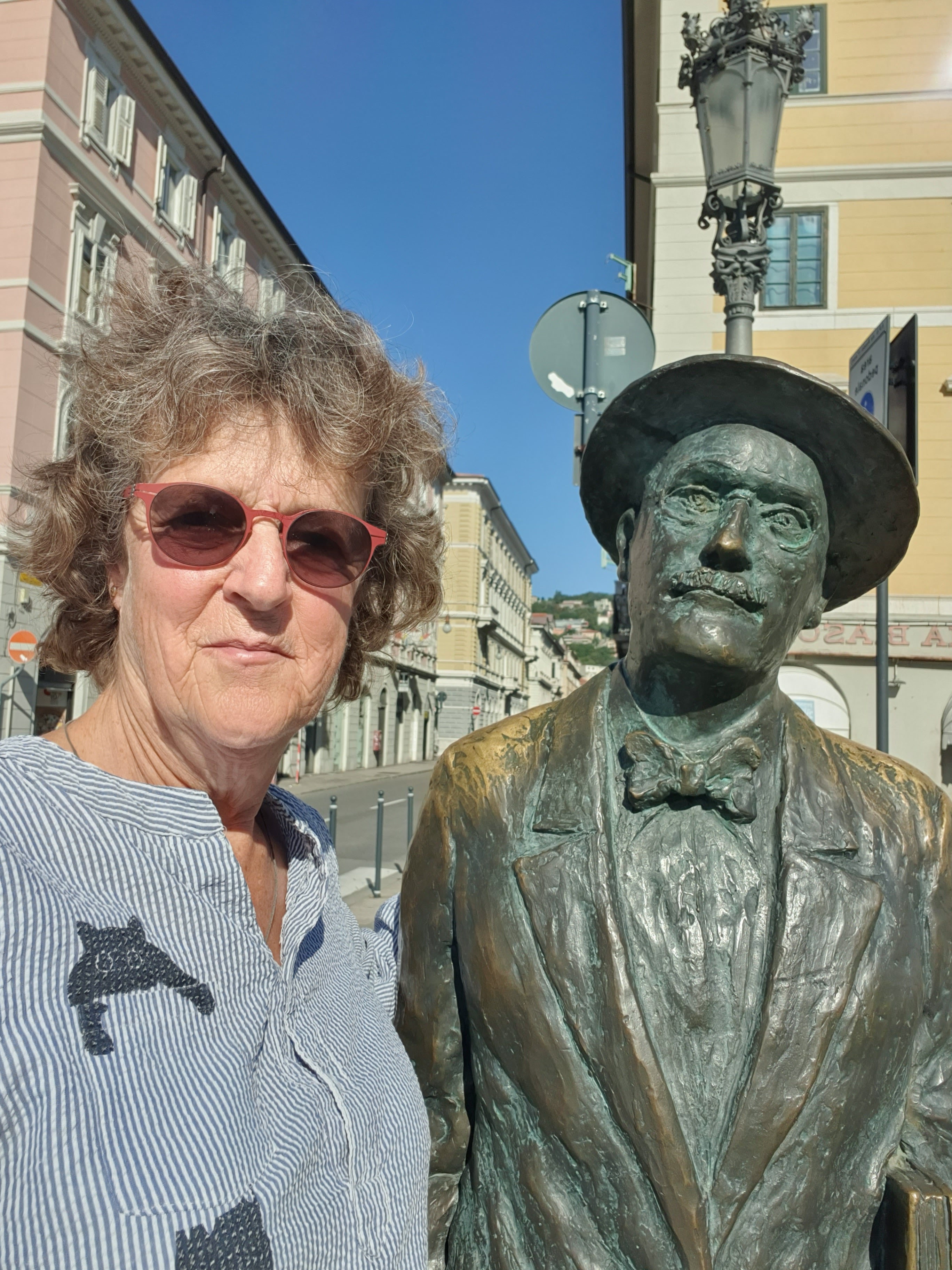
I enjoy this quote: it’s been my phone screensaver. However, while I’d agree with the ‘freedom’ and ‘self-reliance’, some days I do feel ‘trammelled’! Take last month, for example. I called into a bike shop in Trieste in northern Italy to request someone check and tighten my bike’s disc brakes. (In theory I know how to do this, yet with steep coastal roads ahead rather greater expertise than I yet posess seemed wise). The bike mechanic, a man of about my age, spoke little English but quickly understood my request.
“Stop, no oil please!” I call to him a few minutes later. (On dirt roads, I was informed by my local bike shop back home, oil attracts dust and dirt that sticks to the chain, so when I notice the mechanic in the back room has finished my brakes and has taken out a can of oil to squirt my bike chain, I dont want this to happen). I am surprised when he looks at me but then continues. “No, please ask him to stop,” I request the English-speaking manager behind the counter, “I don’t use oil on my chain, I use wax,” pulling the bottle out from my handlebar bag as I speak to make my words clear.
She calls over to him. “Phew” I think, “problem averted.” Then she informs me, “No problem, he has now sprayed wax on top of the oil.” Maybe only fellow cyclists can imagine the gluggy dust-collecting energy of an oil/wax combo, but I guess you get the picture. Sensing I hadnt been listened to had awoken a feeling of anger so strong in me, that my ‘fight/flight/freeze’ response had been triggered. Rather than ask the mechanic to wipe off the mess, I’d hastily paid and fled. “Free untrammelled womanhood”? Nope, not that day! Had you met me along the road later, you’d have found me as trammelled as a cyclist can be!
IN CONCLUSION…..WHY CYCLE, JANE?
“Cycling gives me greater belief in myself,” I write one day in answer to a survey amongst touring cyclists. My comment gains so many ‘likes’, I’m clear I’m not alone experiencing this. Take the ‘water bottle incident’ last month in Croatia for example.
It was one of those days when ‘Komoot’, the marvellous cycle routing App failed me, or rather, I failed to cross check on Google Maps. Leaving the town on the island of Cres to head for the ferry, I’d noted a small section of the route was marked in dashes rather than a full line, and the note,’you’ll need to dismount and push your bike. ‘ “No worries”, I’d thought, “It seems a worthwhile shortcut off the main road.”
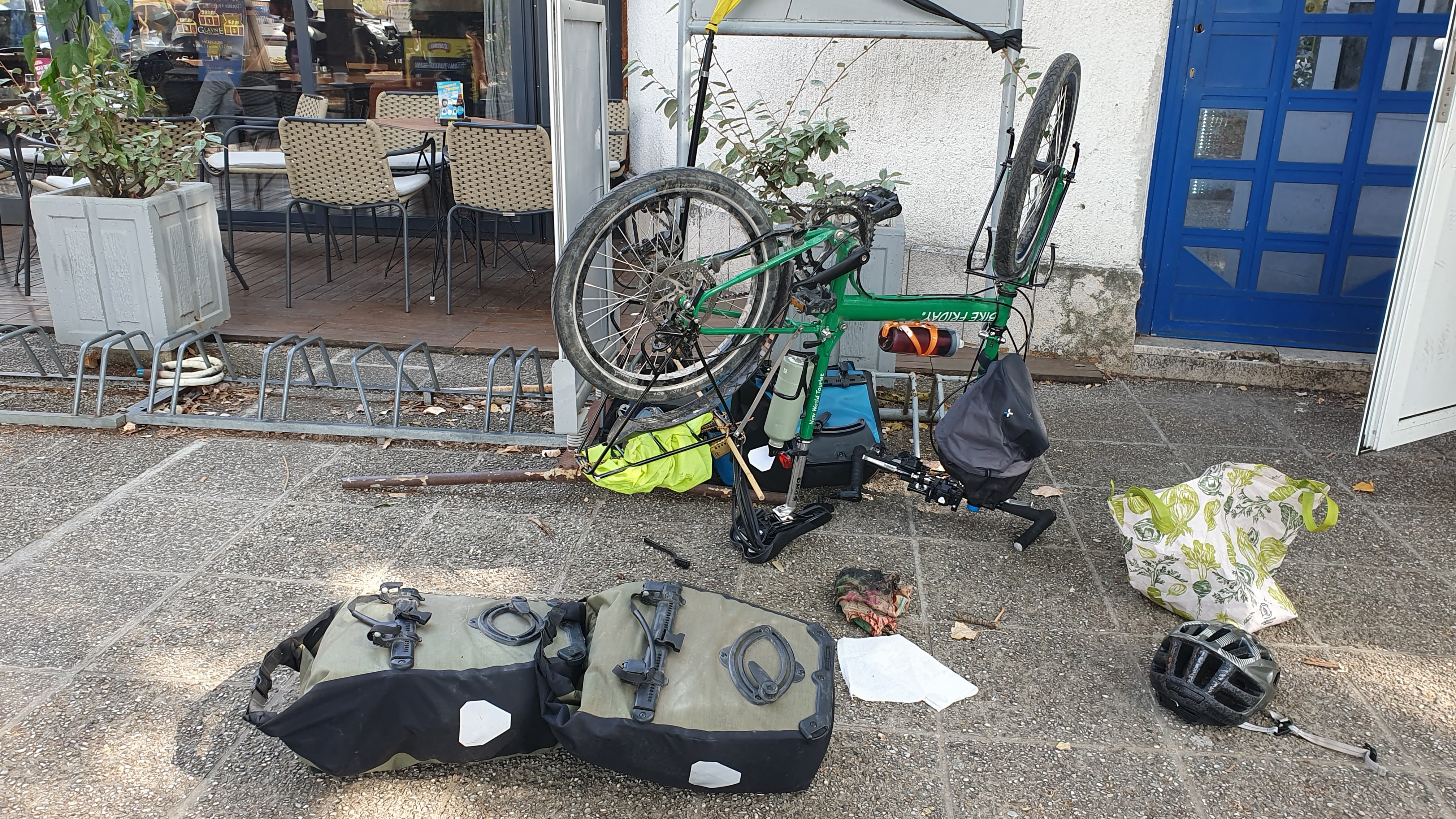
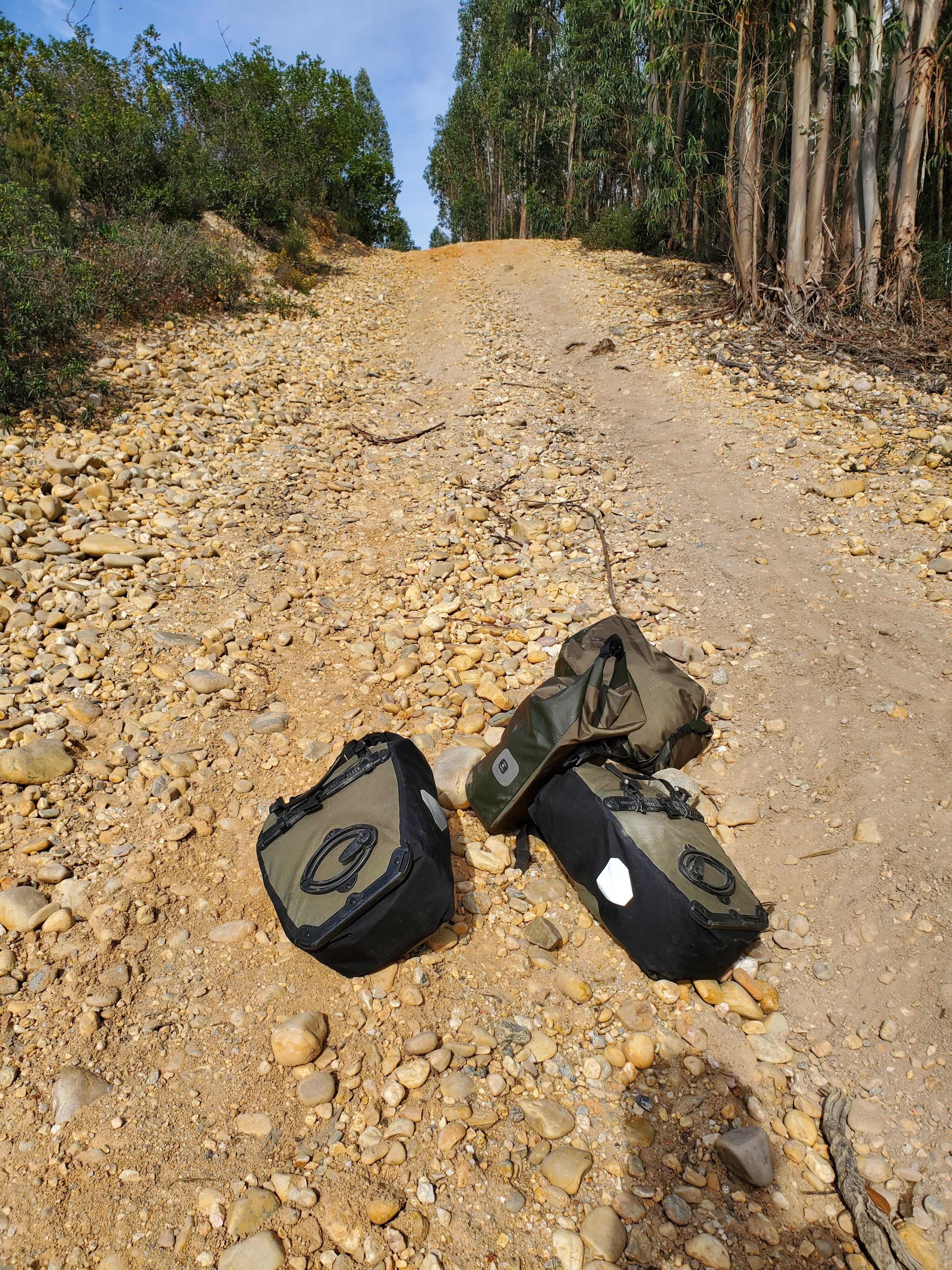
It wasn’t! Three hundred metres up this overgrown path, I’ve had to remove my panniers to lift my bike through a narrow gate. In hindsight that was the signal to turn back but I didn’t! Two hundred metres further on, a high earth bank seems to have been bulldozed over the edge of an olive grove and the path ends abruptly. I hate to ‘admit defeat’ and retracing my steps downhill wont be easy so I decide that if I remove the panniers, I can clamber up the bank with them and carry them through the orcbard to the main road then return and carry up my bike. Fifteen minutes later, unbelievably dusty, scratched by thorns and impaled by my bike pedals and uncomfortably hot, I exit onto the main road, replace the panniers, and head uphill.
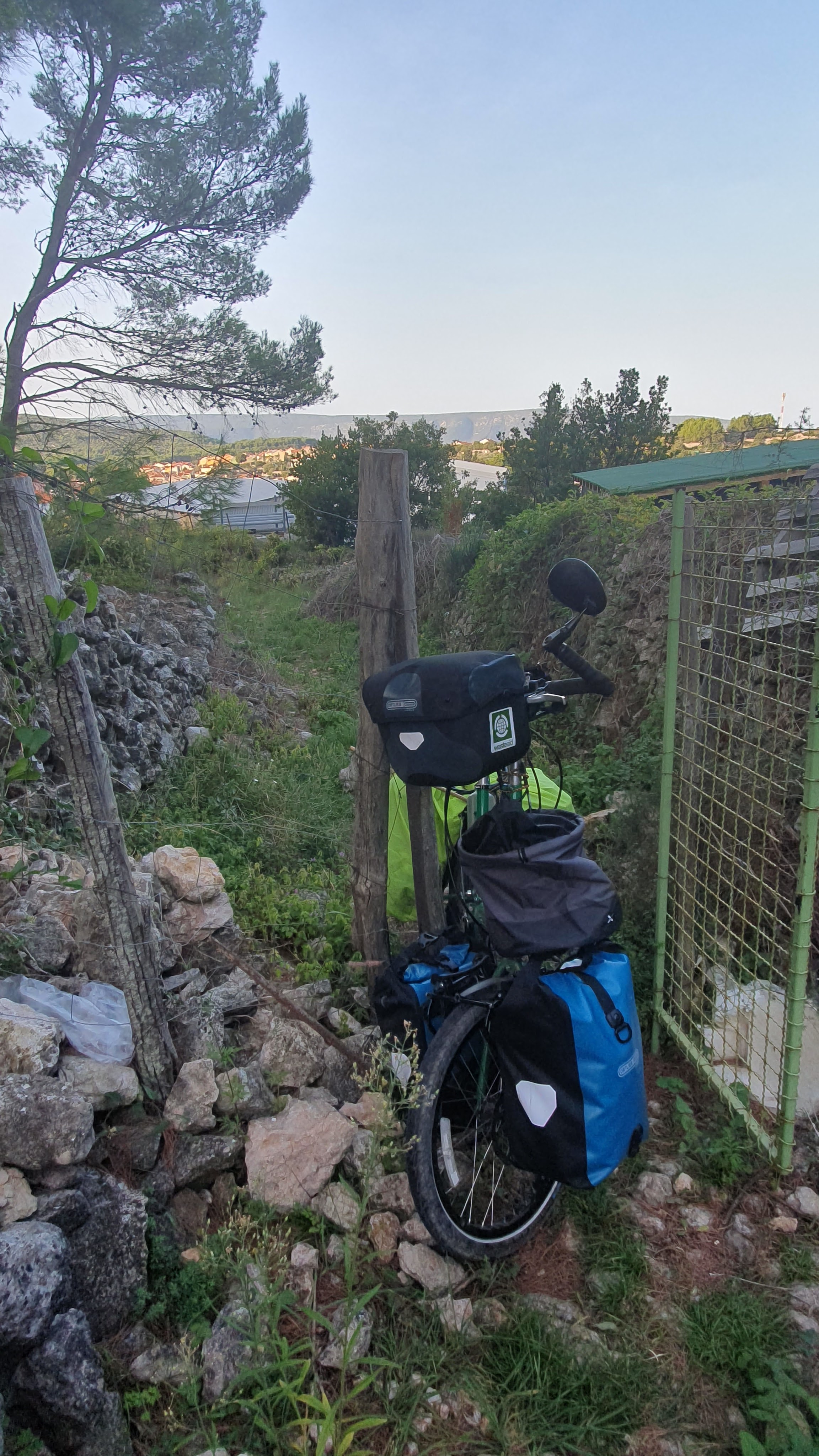
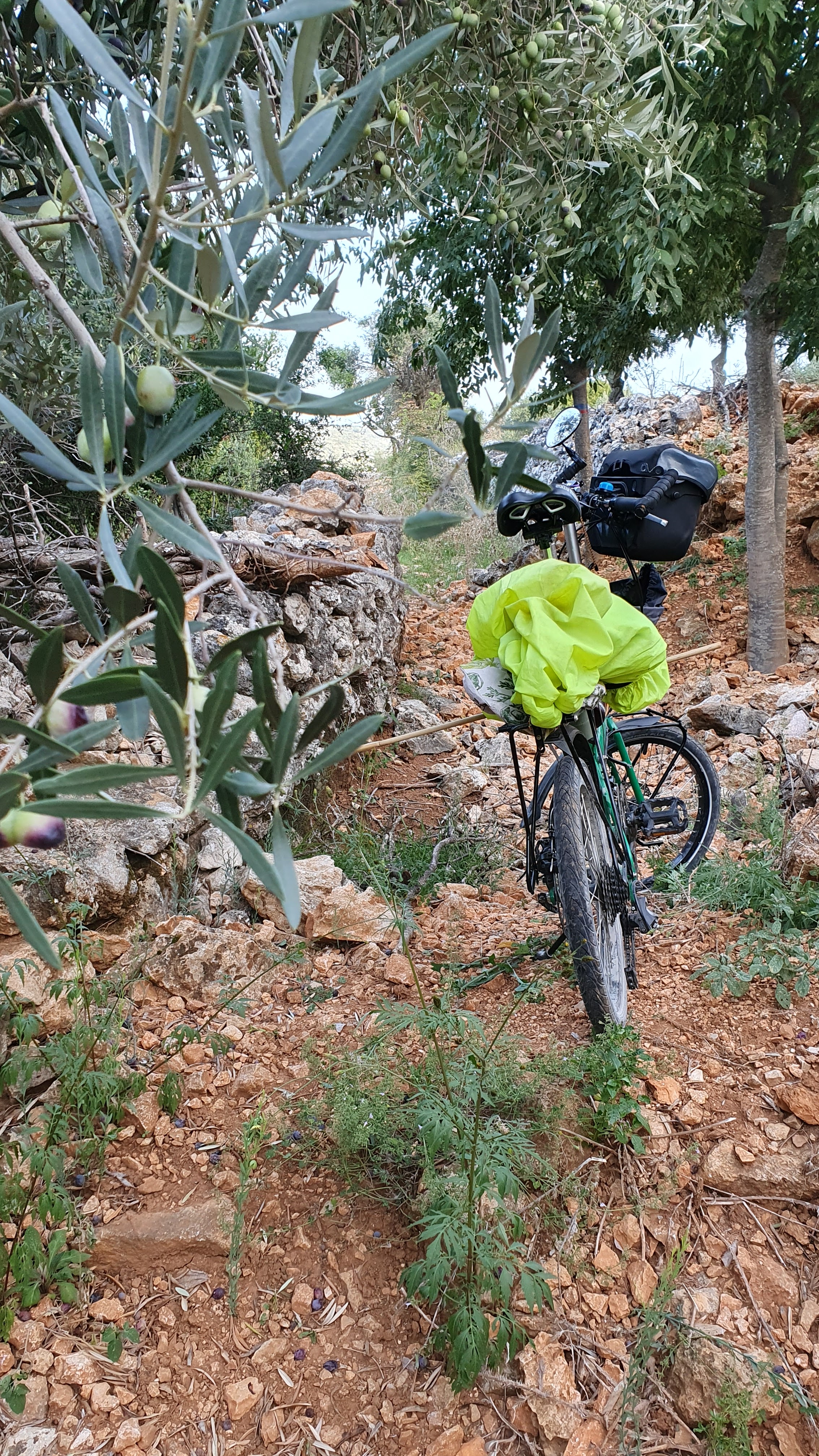
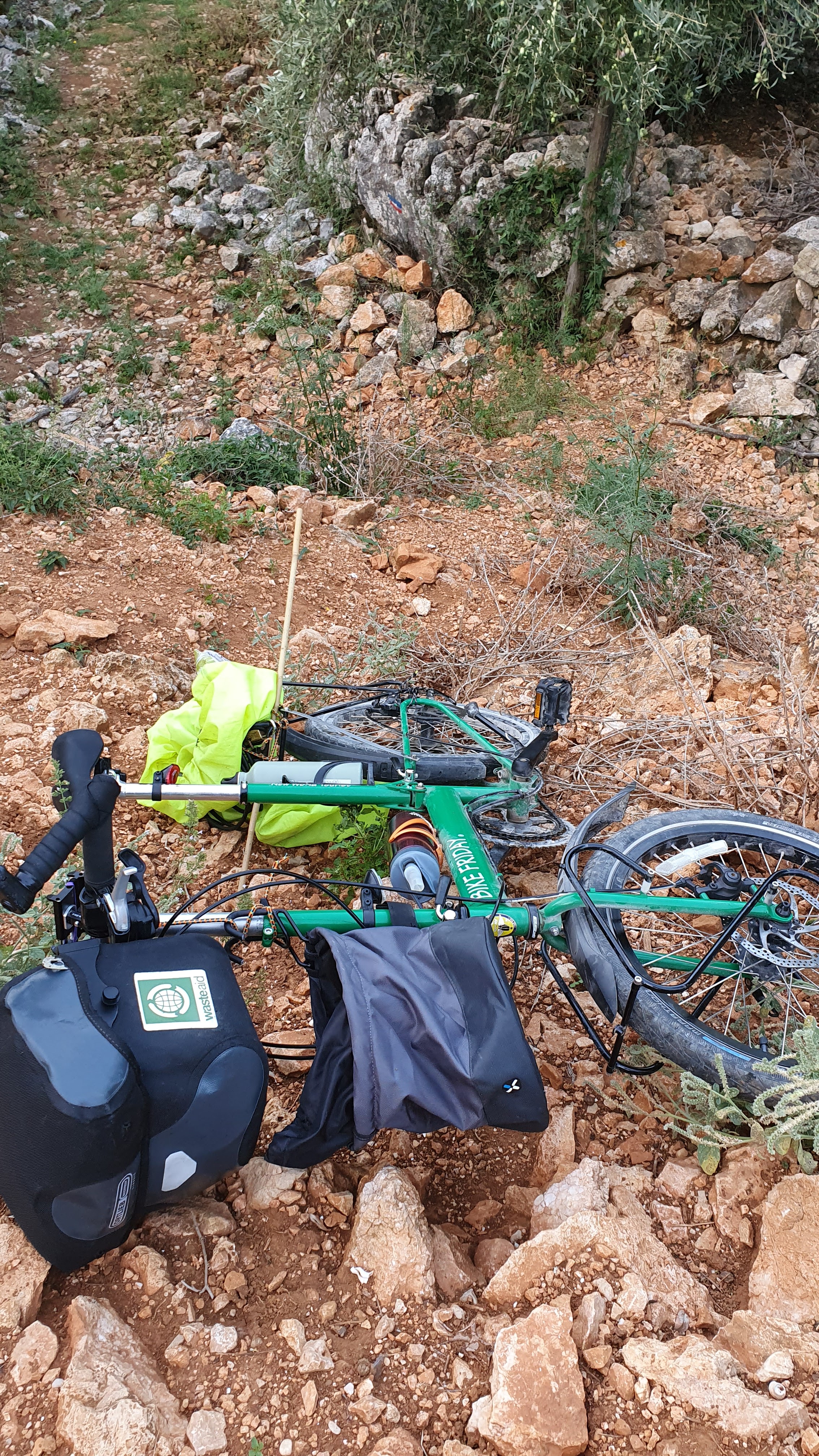
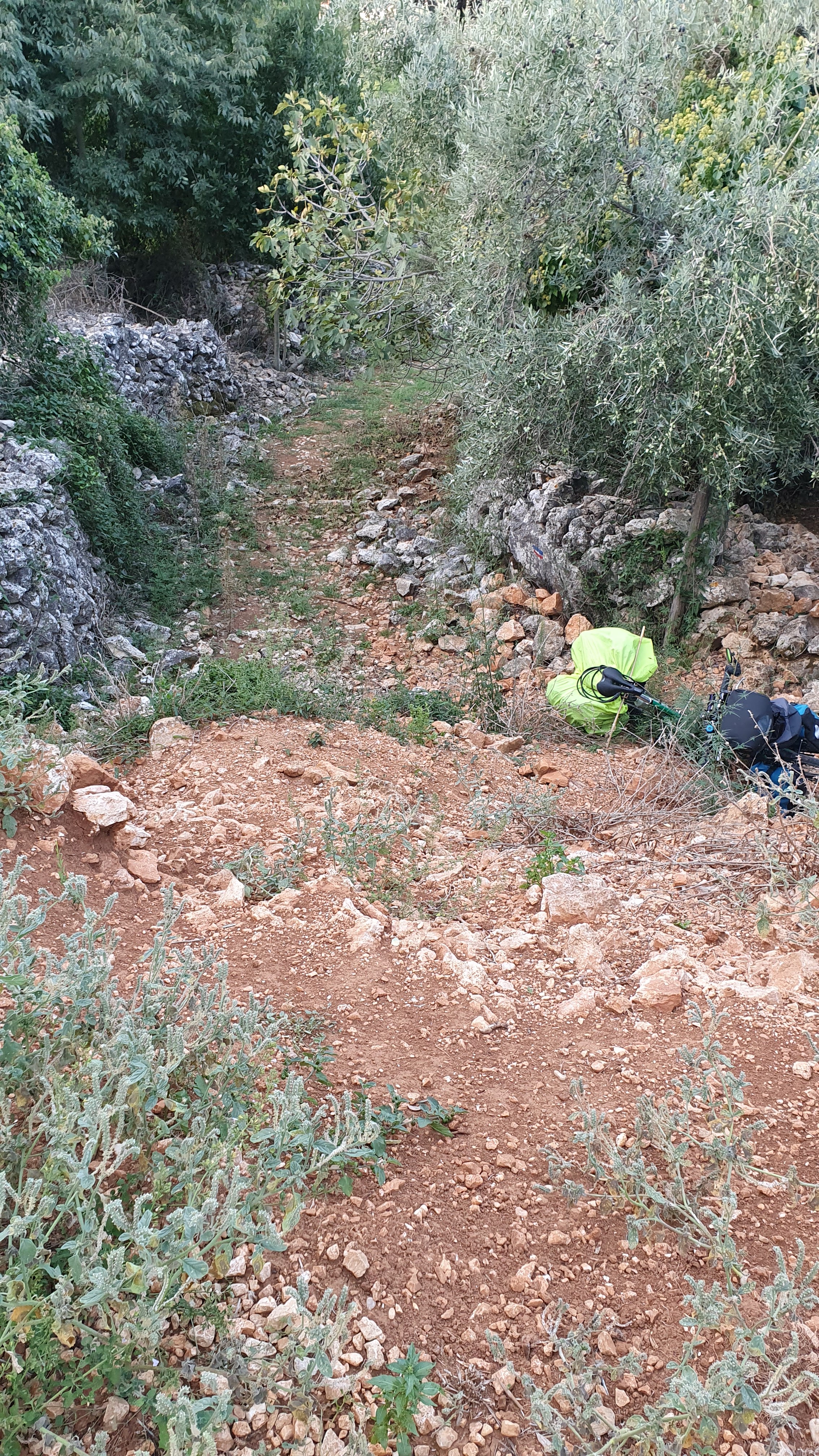
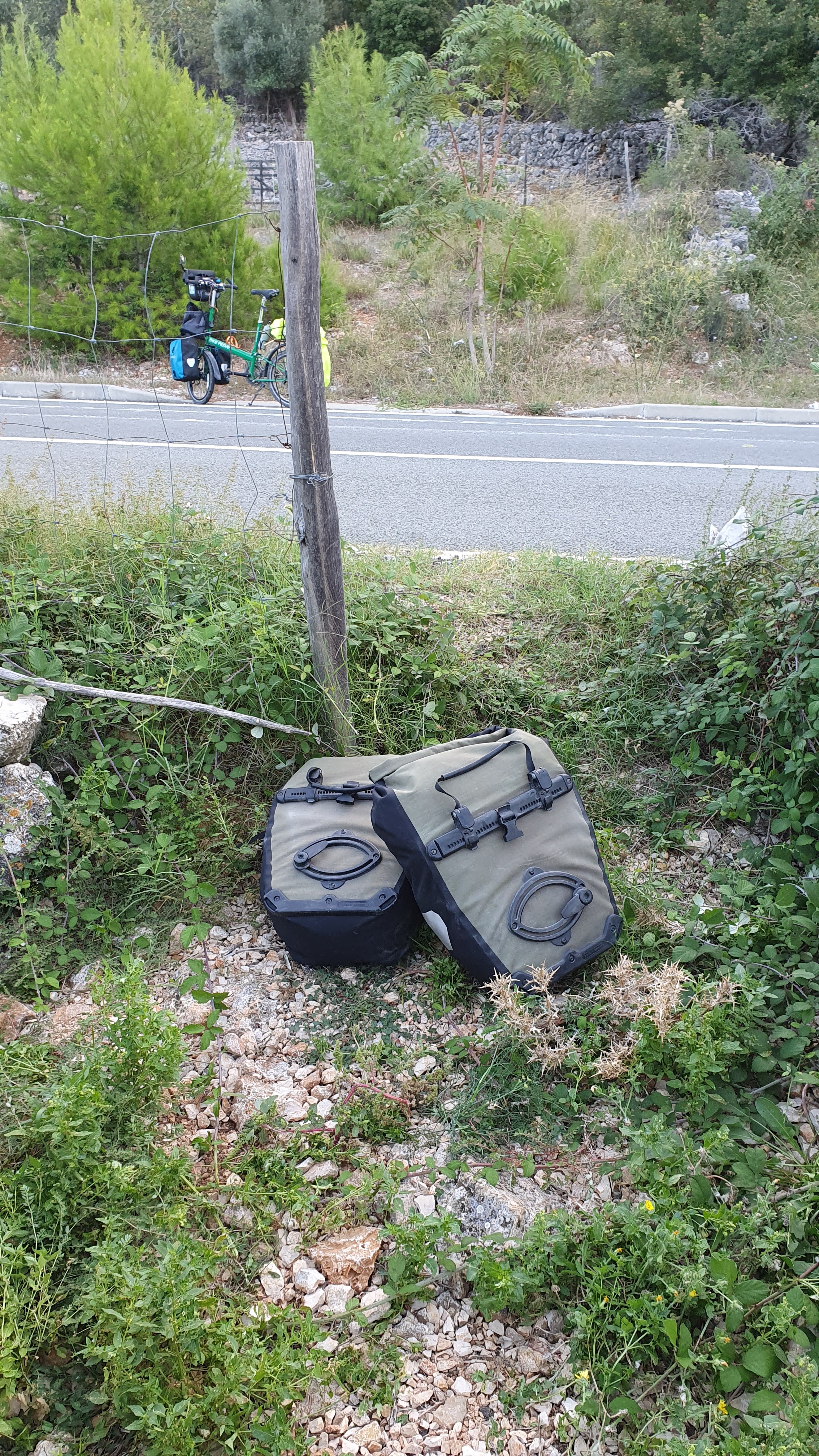
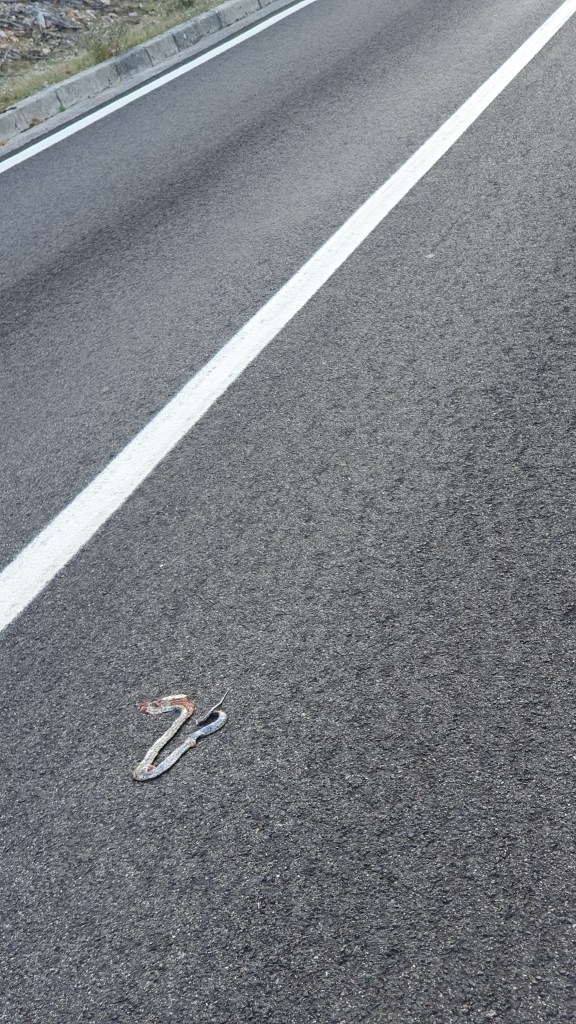
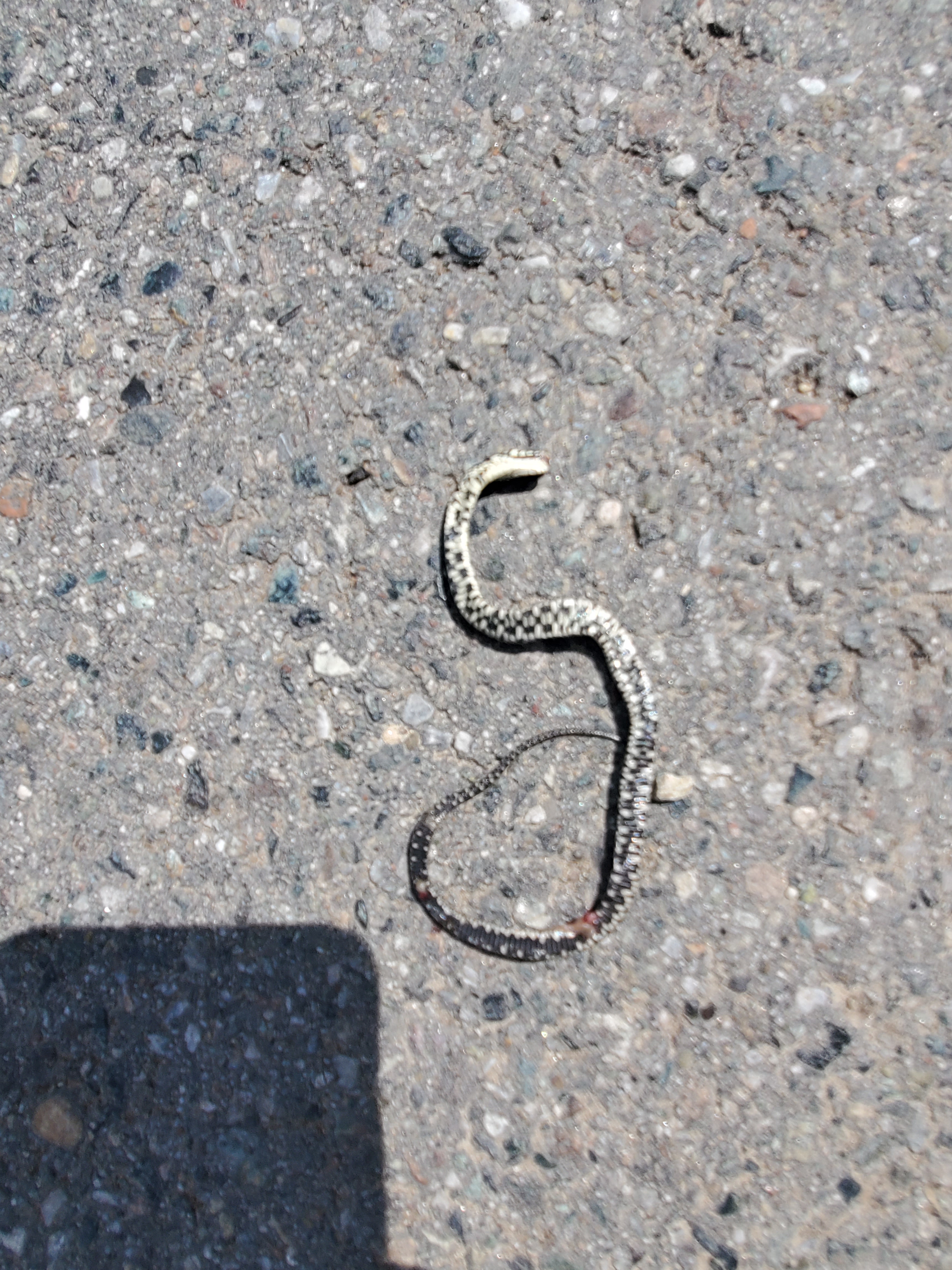
My rejoinder in response to people asking me what cycling is like has been to exclaim,”In the morning I feel 25 years old; by mid-afternoon I feel 85!” That morning, after the portage session, I certainly feel the full impact of my 65 years as I pedal up that hill. The delay has allowed the sun to rise higher so by the time I turn up the road towards the ferry terminal the heat beats down. A further 2km up to the summit takes another 20 minutes of hard climbing, past a snake squahed on the road, so I walk the last kilometre then pause at the summit for a hard-earned drink of water prior to the much-awaited descent.
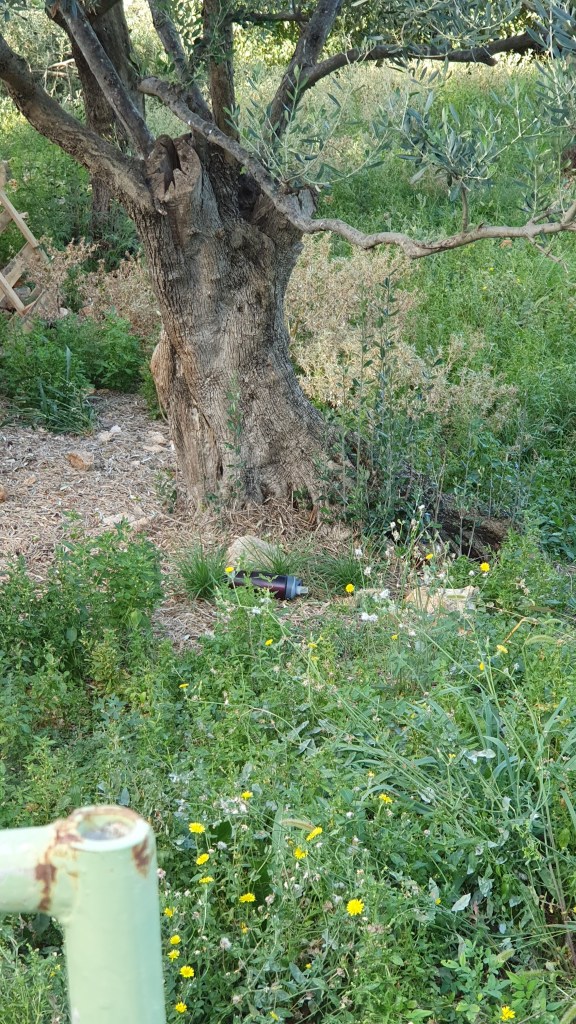
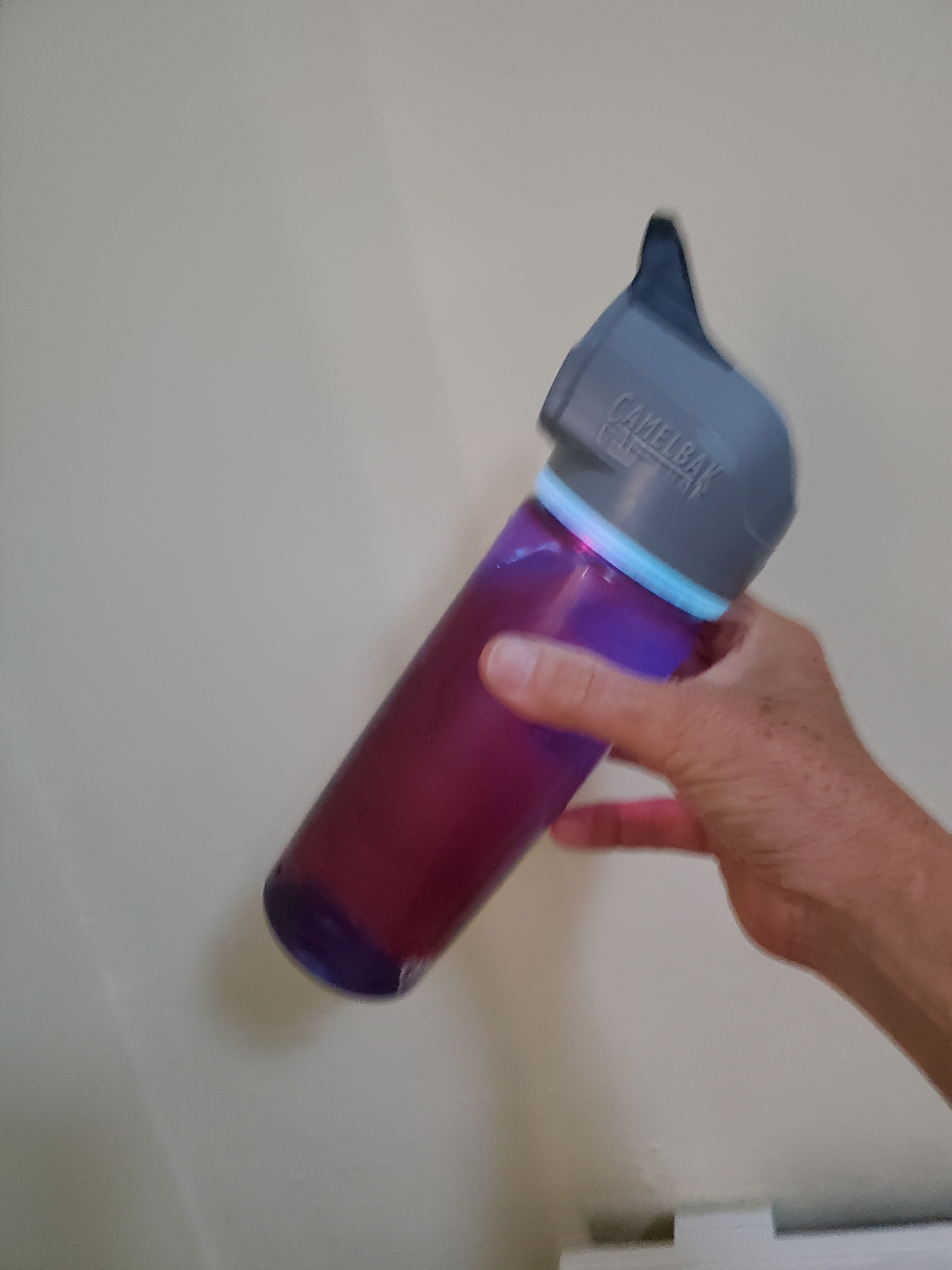
“Oh no, my water bottle isn’t there!” I discover with shock. It can only have fallen off when I carried the bike past the olive trees. So… down I went, down past the squashed snake, back around the turning onto the main road, down, down, down. Far quicker than the ascent, I arrive back at the little gate into the orchard. There lying on the ground,as if waiting for my return, is my water bottle. I take a quick drink, replace it in the bottle holder and set off once again to surmount the summit. “I can do this,” I think to myself, “It’s steep and it’s going to be hard in the midday heat, but I can do this, I know I can.” And I did.
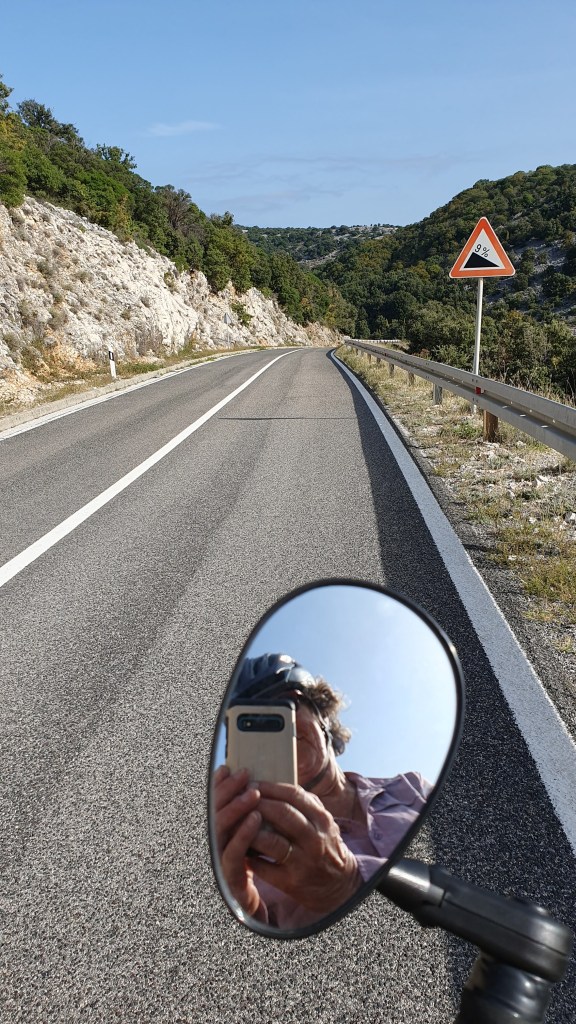
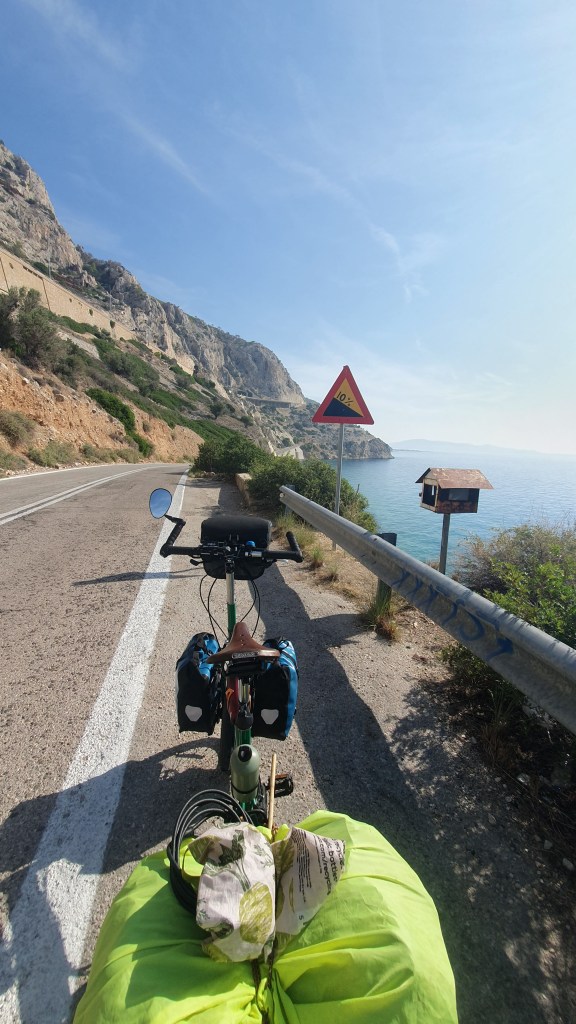
“Cycling gives women a feeling of freedom and self-reliance,” said Susan Anthony. Yes, this has been my experience too. And as well as that, there have been so many moments of sheer joy. Not a day has gone by when I haven’t paused at least once, sometimes several times in the sheer joy of the moment to realise that, “There is nowhere I’d rather be in the world than right here, right now, in my own excellent company, doing this.” And in this awareness that no-one in the world is more fortunate than I, that Dear Reader, I’d like to thank you for accompanying me, and now, I’ll take my leave and say, “It’s a wrap!”
























 Connecting Cheerfully
Leave a comment